Every time a new paper drops saying AI isn’t as smart as we thought, it goes viral. Same when a new tool looks superhuman, both extremes catch fire.
In the past week alone, I’ve seen one post saying AI is a house of cards, incapable of reasoning. And another warning it’s about to replace all white-collar work within a year.
What’s wild isn’t the content of these takes themselves, but how deeply they align with the incentives of whoever’s speaking.
The Apple paper that questioned AI’s reasoning was careful. But many took it as validation that the hype was over. Relief.
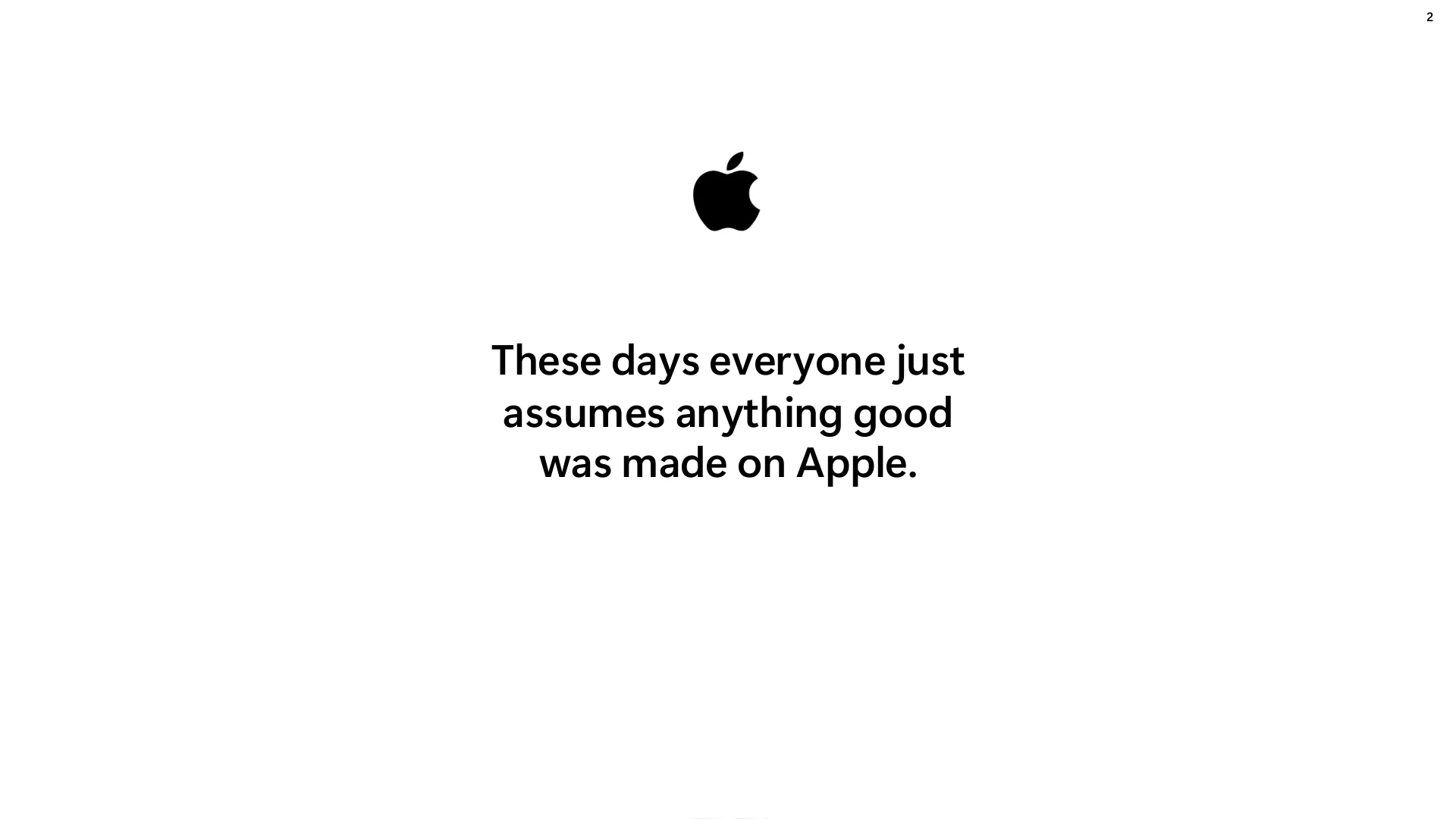
On the other side, OpenAI leadership leans into speed and inevitability. Their subtext is clear: adopt now, or fall behind.
Neither stance is neutral or objective. Companies behind in the AI race benefit from delay. Those leading need acceleration. Individuals, too, often adopt the stories that best fit where they sit… or what they fear.
No conspiracy necessary, this is just how systems incentivize strategy.
When OpenAI underplays risks, it’s strategic.
When Apple slows the narrative, same thing: strategic.
Neither is lying.
But both are choosing which truths to remain unsaid, and which futures to make feel inevitable. That's strategy.
Who is leaving what out, and how do they benefit? And why?
This isn’t new, but it can be dangerous. When systems reward plausible deniability, willful unknowing (silence) pays more than transparency. Neither side is lying. But at this scale, selective truth is irresponsible. Framing the future to fit your timeline isn’t neutrality, it’s strategy with externalities. Both speak truths, and both omit truths. But at this speed and reach, that selective emphasis is a form of irresponsibility, even if it’s competitively rational.
And that, in my pov, is the thing to watch for. Not so much that "AI is accelerating," but that we’re letting a narrow group of players frame the emotional terrain of the conversation in these polarizing ways. And we’re even helping them by adopting their stances, fighting their rhetorical war for them.
Remember, something doesn’t have to be a lie for it to not be truthful.
That’s why we also have to ask:
What’s being left out of each story?
Who benefits from which story?
Or in this case, whose job is it to slow the narrative, or speed it up?
And why?
If both stories feel reductive and unrealistically seductive, then the real question becomes: why, out of all the "truths" you could’ve said, you said what you said? That’s the part that’s usually left out of carefully crafted narratives. And that’s where Apple & OpenAI are failing us. While these strategic narratives polarize society, the real work is quieter. More grounded.
Less exciting than viral headlines. It’s pattern recognition over panic. Discernment over performance.
So when AI headlines feel like whiplash, remember: you’re not watching truth unfold. You’re watching strategy.

As AI begins to automate workflows, and headlines of pending mass-layoffs (yes, still happening) flood the feeds, the conversation naturally evolves into the question of value... and where we place value (wages, evaluations, demand, morals, taste, truth, etc).
But this isn't new. AI automating writing, imaging, audio, and workflows is a continuation of the industrial age: printing automated manuscript. The loom automated pattern. Pigment factories automated color. Photography automated depiction. Digital tools automated design. Now AI is automating the act of making and thinking itself (exaggeration, but that's the claim). However, none of these went away entirely because of automation. There is still amazing art that is done on the loom, and a first edition of a book or vinyl is still such treasure!
Historically, each time production gets easier, the same thing happens: the value of producing moves as the tools evolve. Not randomly, though. It predictably migrates toward the thing production can't replicate: the felt truth that gives a made thing its reason to exist. When we can make anything, the question becomes simple and hard at once: what still matters, and why?
or most of history, that question belonged to niche artists and philosophers. Photography forced painters to answer it. Recorded music forced performers to answer it. But those were narrow disruptions. AI is not narrow. It affects designers, strategists, writers, musicians, filmmakers, marketers, founders; anyone whose work involves producing form, and to a less clear degree, thinking. This means the question that once belonged to the avant-garde now belongs to everyone who makes or thinks for a living.
This essay traces where value has gone each time production was automated, names the pattern, and follows it into the present.
I'm reluctantly calling it revelation (and yes, I know how corny that sounds): the moment when form, context, and timing converge to let people feel a truth they already half-knew but had not articulated. That's where creative value has always migrated… and it’s where it’s migrating again, but now with mass consequences.
And as a last disclaimer about my personal stance, it's that not all film has died because of digital cameras, and theater, for example, won't die out because of AI. As such, while the dominant narrative about AI is more polarized (tech utopia for investors vs. technofeudalism dystopia for workers), the full picture is more complex. And that's where looking back at historical examples of automation can help us navigate this transition.
So, back to our central question, where does value go when anything can be made, when machines can write and make images and sounds? What happens to truth, when we can no longer trust the images and sounds flooding the feed to be real?
After Realism 1.0
To better understand this two-fold migration of value and reality, we can look back at the birth of photography; it's the clearest precedent because it was the most dramatic. Over a century ago, the camera outpaced painting as the fastest way to capture visible reality. Once the image could be captured mechanically, realism lost its monopoly on truth... and value migrated. Economic optimization reshaped the industry of image production, but it didn't kill painters. Instead, painters pivoted. Impressionism chased time. Cubism dismantled perspective. Abstraction went inward towards the body and psychology.
By the early twentieth century, the most radical act was not a new technique or medium, but a new idea. Duchamp signing a urinal as Fountain was not a prank, as much as it was proof that value no longer lived in the brushstroke or the making of the object. Instead, it now lived in the frame around it. Conceptual art began there. Not as a style, but as a conceptual frame, adapting to the economics of mechanical reproduction. If machines could make the image, artists would make the frame; the encounter; the question.
This is where value migrated for artists, from realism as revealing truth, to concepts revealing truths through "encounters."
For example: conceptual artists shifted from crafting objects to designing contexts where felt truth could surface. Lygia Clark built sensorial devices that turned spectators into participants. Hélio Oiticica brought the street into the gallery. Arte Povera (the Italian movement that used industrial scraps and raw materials) transformed waste into rituals of renewal. And earlier, Dada blew a hole through rational modernity with collage, chance, and anti-art: a refusal that made new seeing possible.
None of these movements abandoned craft (nor will AI kill craft). Instead, they reassigned roles & values. The finished surface (craft/production) mattered only insofar as it let the idea be felt; physically, emotionally, socially. People called this “dematerialization,” but the work didn’t just vanish, it expanded.
The material became relation, context, situation, time. Art seeped into life, and life returned the favor. We are inside this feedback loop.
That dematerializing pivot from plastic art to conceptual art is echoed in the shift AI is now forcing across the rest of culture. We aren't likely to pivot away from technical optimization (AI), just as painters didn't pivot away from paint.
Instead, we pivot toward the why.
And every era facing automation ends up doing this: once the technique is reproducible, the value of production migrates to the felt truth that technique can reveal: a work, a brand, a message, or a moment that lets people feel something true about the world or themselves, in a way that has consequences; it moves, it reorganizes.
What Revelation Means, Here
I need a term for where the value goes when production is automated. “Creativity” is too vague. “Ideas/Concepts” is too disembodied. Taste is a POV with memory, an ingredient, but not exactly a measure. The word I keep coming back to, even if imperfectly so, is revelation: the surfacing of felt truth through an encounter with form, with reorganizing power.
Not divine disclosure. Not a eureka moment. Revelation, as I use it here, is what happens when form, context, timing, and people converge to expose an underlying relation… when a work lets you feel a truth that was already present but had not been made visible. Heidegger called it aletheia, truth as unconcealment. The Gestalt psychologists called it insight learning. Bateson called it a difference that makes a difference.
Different vocabularies, same phenomenon: the world briefly reorders itself in front of you, and with you.
Notice that time is one of the ingredients. Context is another. Revelation is not a property of the object, but a property of the encounter. The same work can reveal or occult, depending on when and where it meets someone. This matters because it means revelation highly contextual and crosses the entire spectrum from individual to collective. It's situational. It depends on the gap between what people already feel and what has been evoked. Althusser called this ability to move, to connect, "hailing & interpellation."
In art, revelation arrives through perception. You see Fountain and realize art’s definition is institutional, not material. You wear one of Clark’s wearable sculptures and feel authorship dissolve. You experience Tropicália and politics slips into rhythm.
Similarly to art, in strategy, revelation arrives when a campaign, a product, or a line names what culture could not yet quite say, but felt. When Volkswagen said “Think Small,” it turned modesty into intelligence and made an anti-status car newly legible in a status-driven market. When Apple said “Think Different,” it reframed technology as an instrument of dissent and creative identity. When Patagonia said “Don’t Buy This Jacket,” it surfaced the contradiction inside consumer culture rather than hiding it, making restraint itself part of the brand’s meaning. When Always asked what it means to do something “like a girl,” it exposed a phrase people had absorbed without examining, then reversed its charge. In each case, the execution did not merely decorate a message. It made a latent truth feel newly available.
These moments work because the execution lets people feel a truth they already half-knew. That's revelation: a recognition you did not know you were waiting for. They don't just show something new. They show something true… moving. And the movement they create isn't incidental. It is the point!
Execution as Revelation
It’s easy to say “ideas over execution,” but execution is what makes an idea real. It is the translation layer, the body, the point where a thought becomes lived experience. A revelation doesn't count until someone feels and is moved by it.
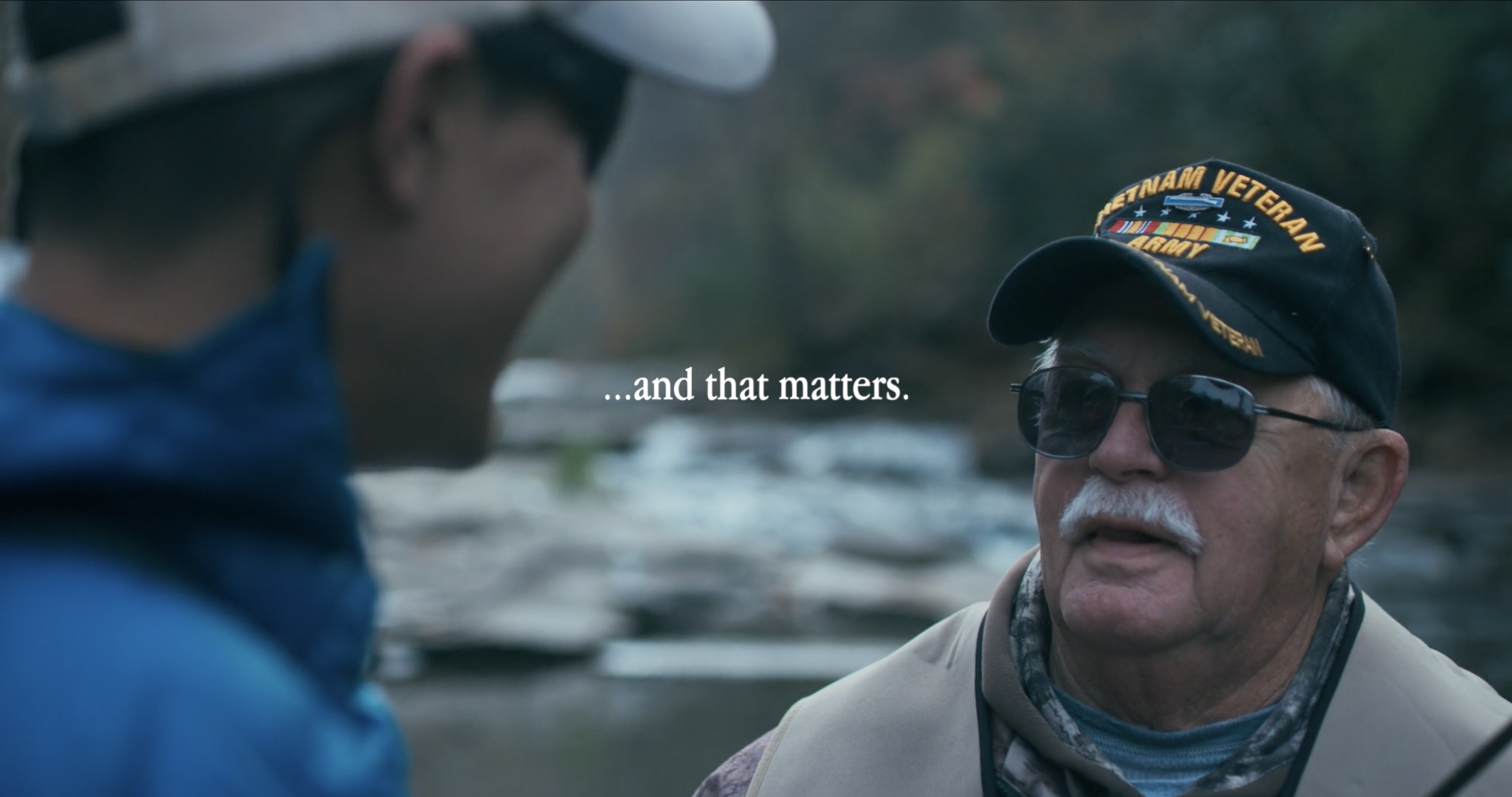
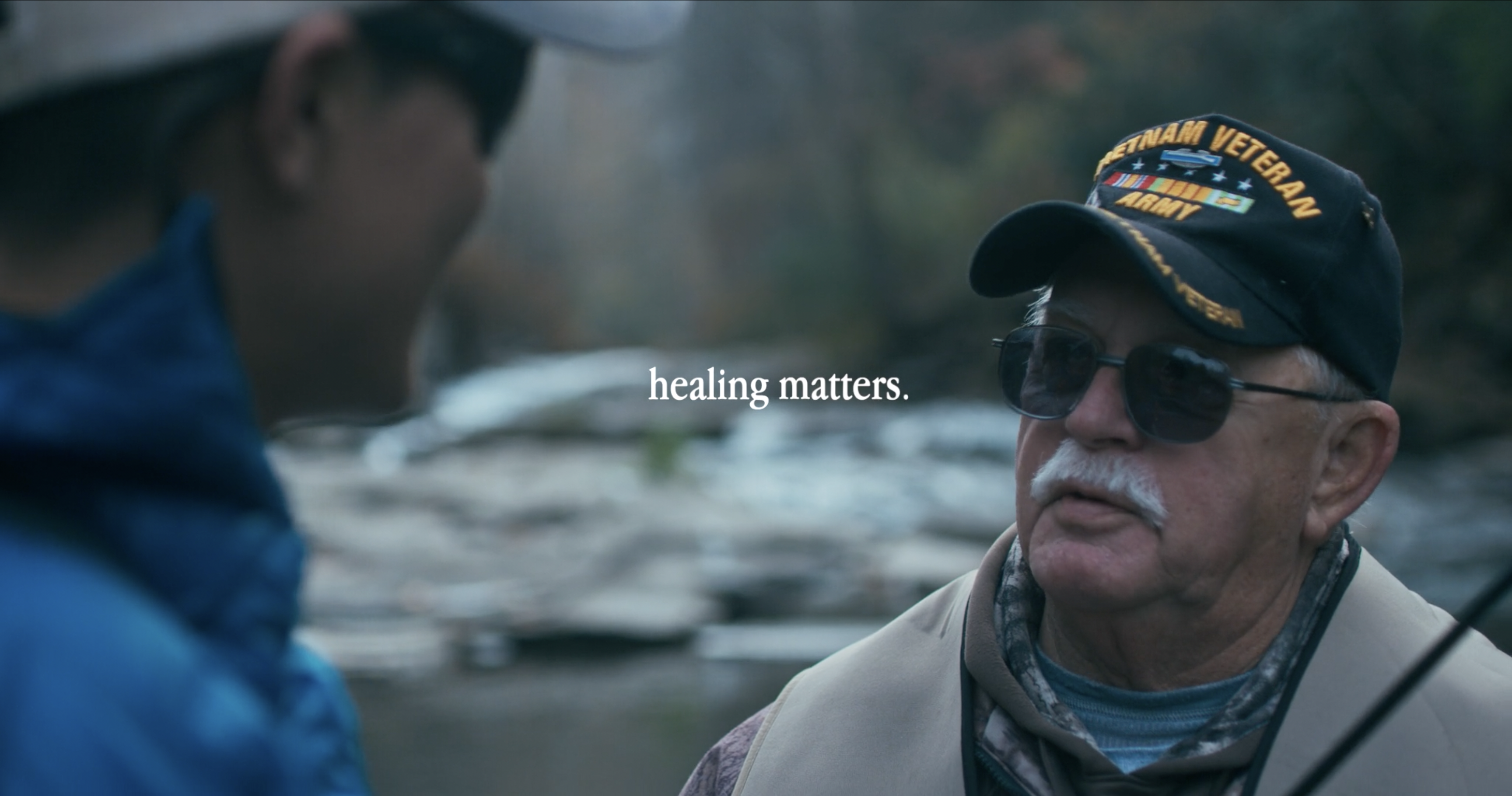
That's why a single captioned video can carry more truth than a million-dollar spot or a museum piece. Not because it is naive, but because it lands. This doesn't negate campaigns or gallery work… it expands the scope, in the same way that conceptual art’s dematerialization expanded the scope of what counted as art in the age of mechanical reproduction.
Form is the delivery system for that connection... that landing. Michelangelo used marble. Clark used plastic. A strategist might use a product drop or a line of copy. The question is always the same: does it reorganize how I see? Not sentimentally, but structurally. Does it reorder the relation between me and the thing I am looking at? These types of works use time, context, and relations to hail an interpellating subject in a way that moves and reorganizes.
Craft used to mean mastery of materials: pigment, type, film stock, code. Now it means mastery of transmission: how to deliver an experience that feels inevitable. The new artisan works in attention, timing, relation, context. In design, the most elegant interfaces are invisible. In film, raw texture often feels more trustworthy than pristine CGI. In culture, a single sentence can outperform spectacle because it meets people where they already live, allowing them to come in contact with a felt truth they haven't fully articulated yet.
In the age of AI, the automation of certain types of production are not signs of social decline. They are signs of craft evolving its job description. Arte Povera and Tropicália understood this early. Their materials were humble because meaning had migrated into relation. A crumpled sheet of lead, a samba loop, a street procession; each was a delivery system for revelation. The measure of craft isn't precision or finish. It is fidelity: can it carry the signal cleanly? Can it let the truth be felt? Does it reorient?
Meaningful work moves people into awareness. Everything else is decoration.
Revelation → Movement → Value
Every act of creative work, art, strategy, invention, follows a common loop.
Revelation is the surfacing of the unseen. It names the pattern behind the noise… not by explaining it away, but by letting people feel its structure. Sometimes that is a sentence that makes a feeling legible. Sometimes it's a gesture that bypasses language altogether.
Movement is what makes revelation real. It's the shift that follows recognition: the laughter, the pause, the goosebumps, the protest, the purchase. Form is only the trigger. Movement is the reordering of relation.
Value is movement that lasts. In culture, it becomes shared language. In markets, equity. In individuals, memory, belief, habit, ritual… as LeFebrve calls it, public and private, bodily and spatial practices.
The loop keeps turning. Revelation sparks movement. Movement crystallizes value. Value is capped by the next unseen truth. That's why systems stagnate and avant-gardes arise. Every equilibrium blinds itself to what made it possible. Revelation breaks the trance.
Revelation is the product.
Movement is the metric.
Value is the residue.
When people are moved, they move… and the world reorganizes around that movement. Whether in a gallery, a boardroom, or a feed, revelation remains our most powerful technology.
Systems and Ethics
Revelation isn't automatically good. Every frame that reveals also hides something else. Foucault reminded us that knowledge and power are twins.
When we design revelation, through art, marketing, technology, we design orientation. We shape what people see as possible, desirable, inevitable. A great campaign can liberate or manipulate depending on who benefits from the movement it creates. The responsibility is not only to move people, but to move them toward truths that sustain, not deplete. The measure looks like health; not just of the individual, but of systems.
In art, Hans Haacke exposed museum funding structures. Adrian Piper confronted racial bias in the gallery. They used revelation to expand awareness, not market share. In business, Patagonia, Ben & Jerry’s, and Tony’s Chocolonely have tried, imperfectly, to align profit with coherence. The question isn't just moral in tone. It's structural in effect: does this increase reality, or replace it? If it clarifies the world, it is art. If it clouds it, it is propaganda. Both use strategy, both have value to different stakeholders. One is additive, the other is extractive.
The Public Utility of Revelation
When people talk about art’s social role or business’s purpose, they are often circling the same word: usefulness. But usefulness does not always look functional. Sometimes it is absurd, playful, unsettling: anything that widens perception. That widening is utility. It refreshes the collective map of what is real, revealing growth space.
Conceptual art once called this dematerialization. In practice, it was a dissolution into life. The boundary between artwork and world thinly held, then breathed. Strategy and production at its best does the same thing. It gives language to feelings culture has not yet named. It creates orientation in complexity.
As automation flattens, and in many ways, devalues, production, writing, coding, imaging, sound, revelation becomes a public good. It's how societies recalibrate when brittle priors begin to crack. The work of artists, strategists, and thinkers is not to compete with machines. It is to reveal what machines can't notice: the subjective, the relational, the embodied, the alive... and as a consequence, those felt truths that have not yet been articulated. That which is not yet part of the archive/dataset.
Realism 2.0: The Present Tense
As AI enters the stage, we're living through another realism collapse. Machines/AI can generate flawless images, voices, and personalities. But realism is not reality. Representation has caught up to the visible. What is scarce now is the felt truth. If realism is no longer truth, as in AI misinformation, and anyone can make films, write content, then we have to reconnect with the reason why these things exist in the first place.
So the frontier moves again… from making things, to the why behind what gets made… or said... or done. Conceptual art matters here not as nostalgia, but as precedent. It was the last time creators faced automation and found a way forward by shifting from production/depiction, to revelation.
We are all now being asked to do the same... whether we call ourselves artists, strategists, entrepreneurs, etc.
With AI, the scale is different. Photography disrupted painting. Recorded music disrupted performance. Those were domain-specific shocks. AI disrupts production across mediums, industries, disciplines, all at once. Which is why the pattern that artists discovered a century ago is no longer just art-world trivia. It's a survival map in the age of AI.
Craft as Transmission
So where does that leave craft? Right where it has always been: between idea and experience. Its success is not measured by aesthetics alone, but by fidelity: how faithfully it transmits the underlying felt truth.
A meme that captures a collective mood can be exquisite craft. So can a sculpture, a film, a product launch… if it carries coherence from concept to body to impact. The spectrum runs from Michelangelo’s Pietà to the tweet that makes the reorganizes relationships. The lineage is the same.
The goal is resonance. How does it land. Does it connect. Does it move. Does it reorganize? Does it accrue value or extract? — and for whom?
Meta-Closure
This essay is an artifact of the cycle it describes. It was written in a world where language can be generated by machines. But the work here is not typing. It is the orientation: which ideas to surface, which relations to reveal, which truths to make felt.
Yes, it is AI-assisted. What is on display is a personal, embodied thought in porous dialogue with the world’s data, via a dataset-trained, probabilistic pattern-recognition system, accessed through a natural-language interface and powered by cloud-scale computational horsepower. There is no prompt that could generate this piece without the human truth and the steering that shaped it.
The algorithm organized available data. I decided what deserved attention, which relations to reveal, and what truths to make felt. That is the human layer automation cannot replace: having a point of view and knowing when it lands. So you be the judge. Did this land? Did it point to a truth you already half knew? Does it reorient? I don’t need to succeed to enjoy the process, but its value to you, the reader, is centered around its impact on you.
Writing, strategy, and art are all acts of revelation. They do not compete with production; they orient it. They take the infinite possible and make it legible, touchable, shareable.
Revelation is the product.
Movement is the metric.
Value is the residue.
When people are moved, they move… and the world reorganizes around that movement. Whether in a gallery, a boardroom, or a feed, revelation remains our most powerful technology.


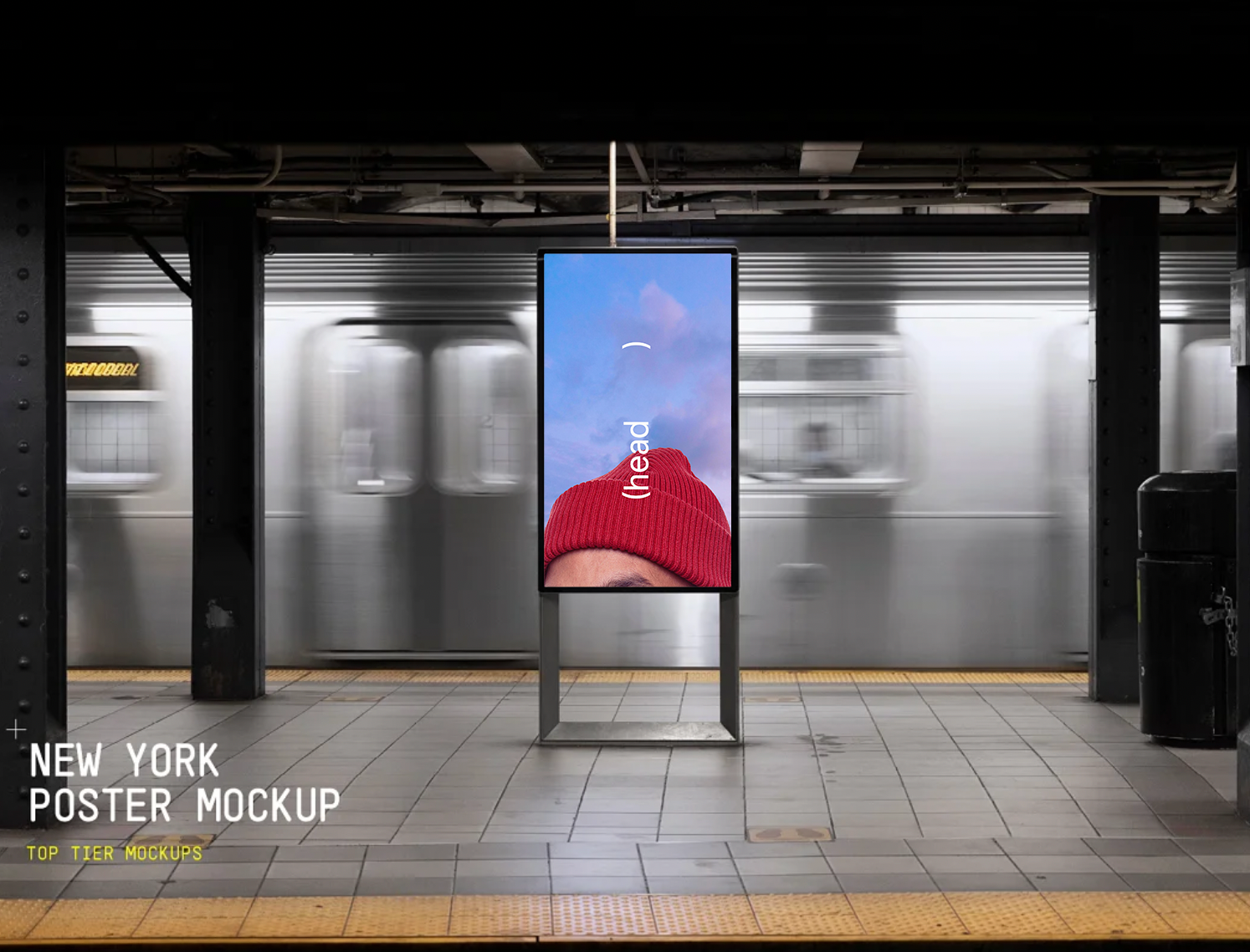
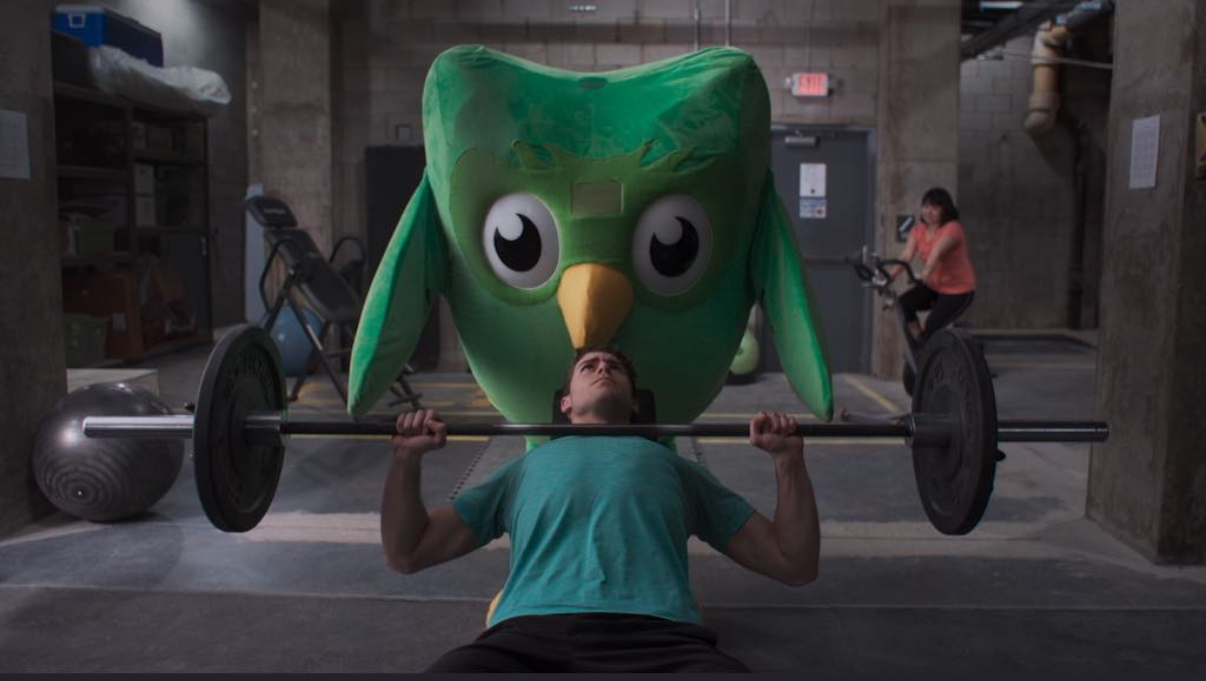
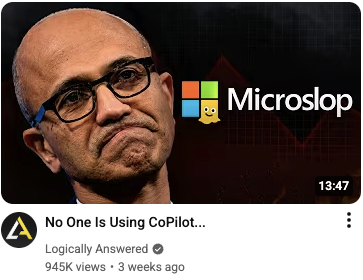
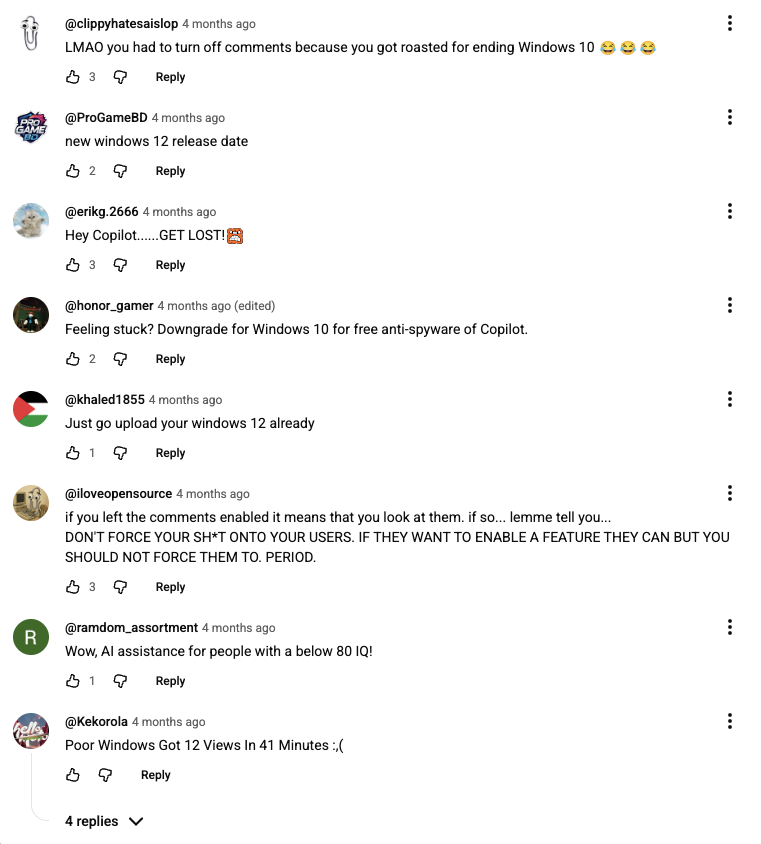 The negative social sentiment compounded the misread. Online hostility toward Microsoft AI looked like a verdict, but it was also partly performative: belonging behavior, in-crowd skepticism, it's cool to hate [X], now. The human truth underneath it was "I don't see the upside for me, yet... considering the polarizing narratives." Misreading this part of the skepticism means you never find the opportunity.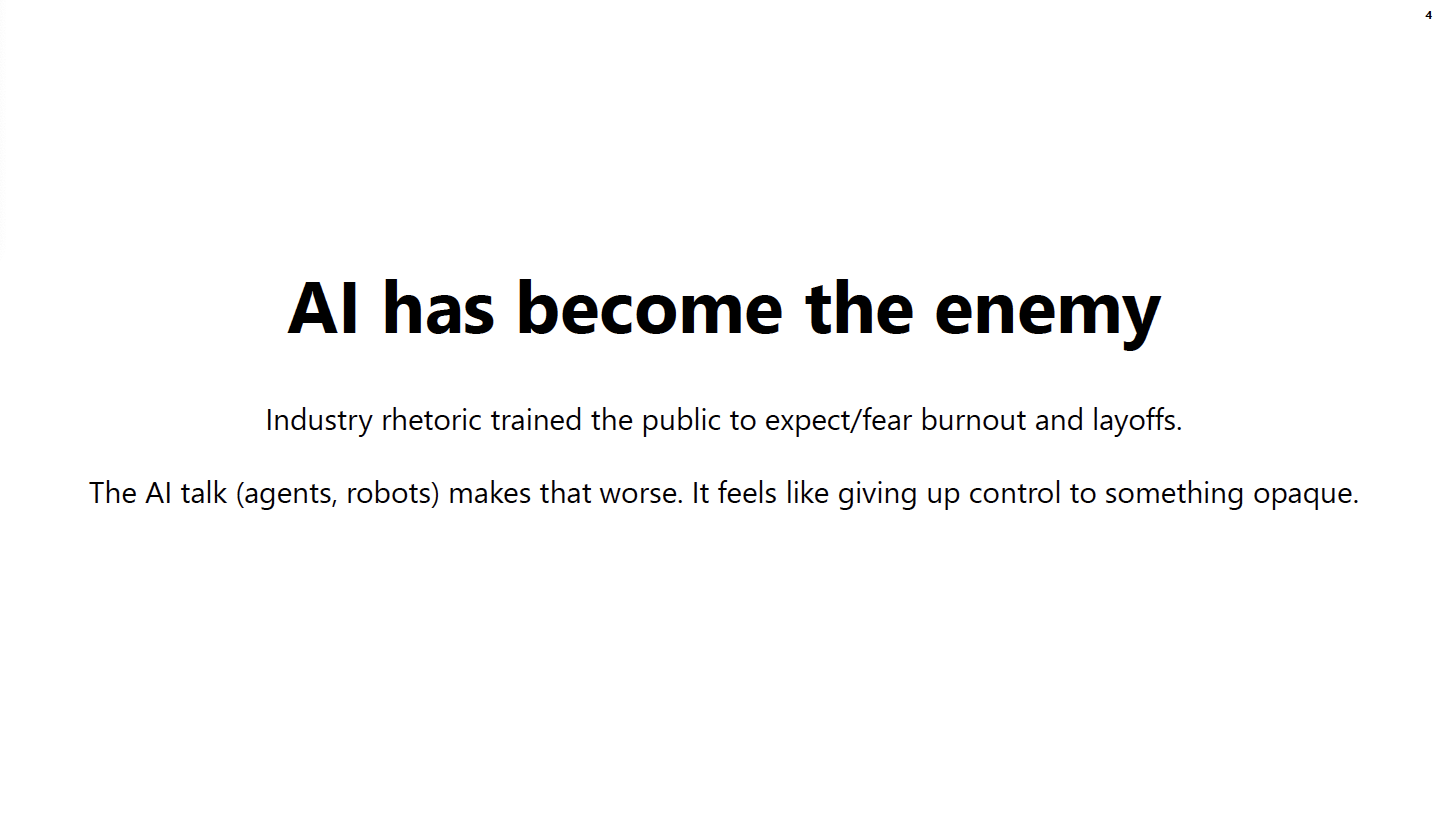
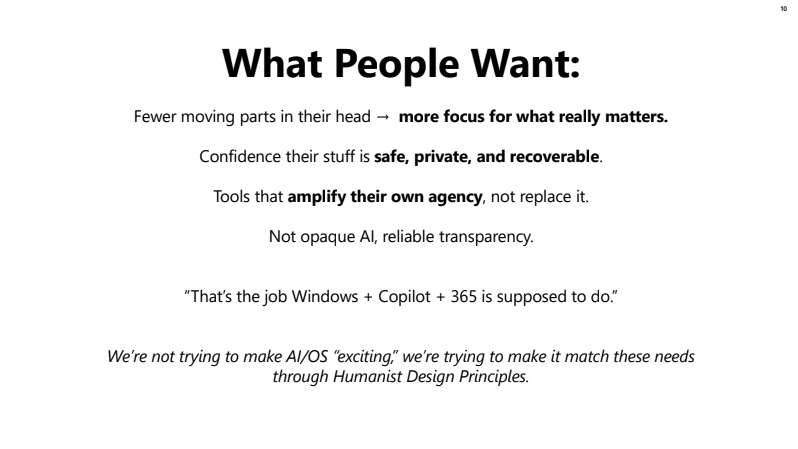
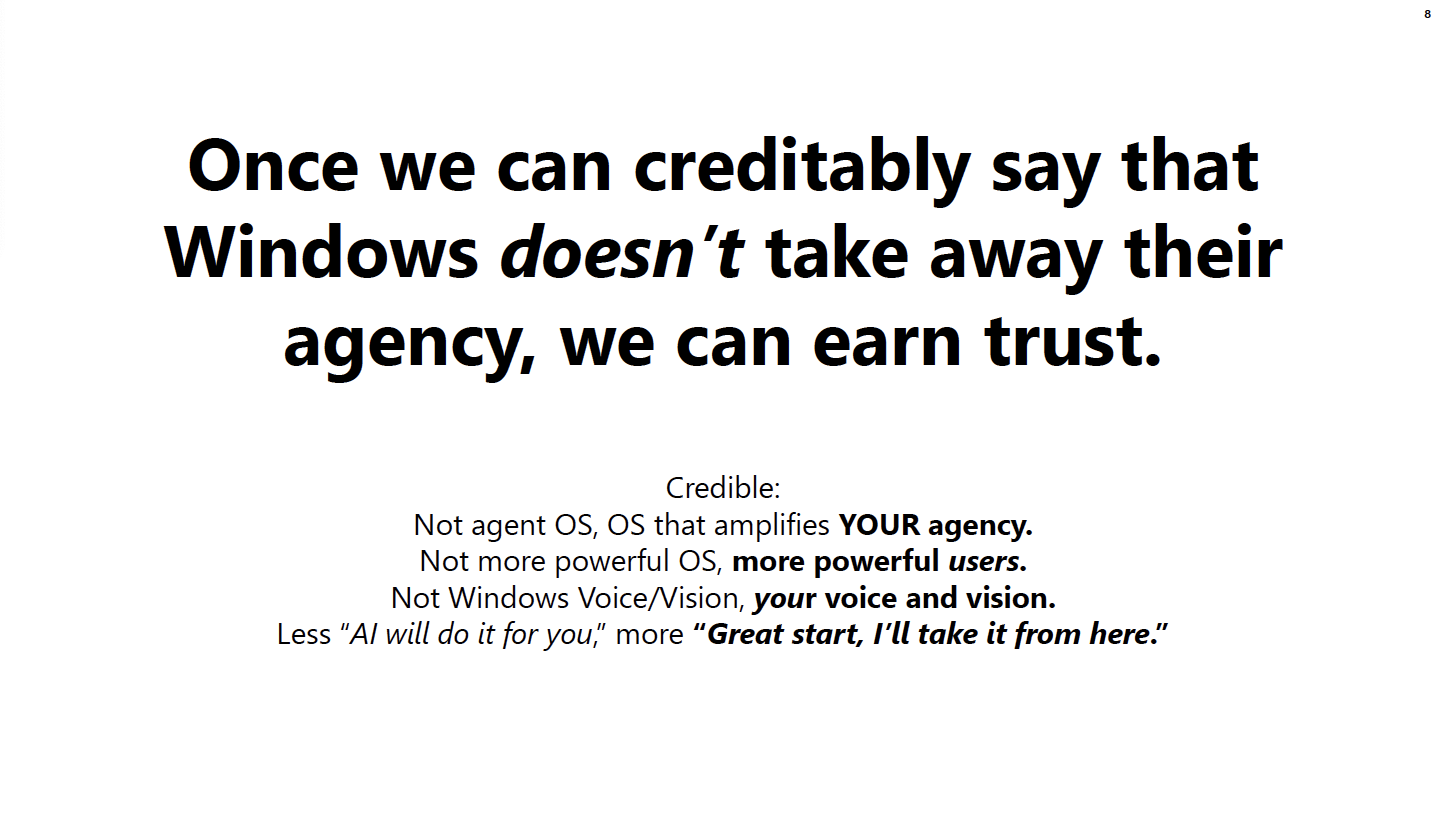
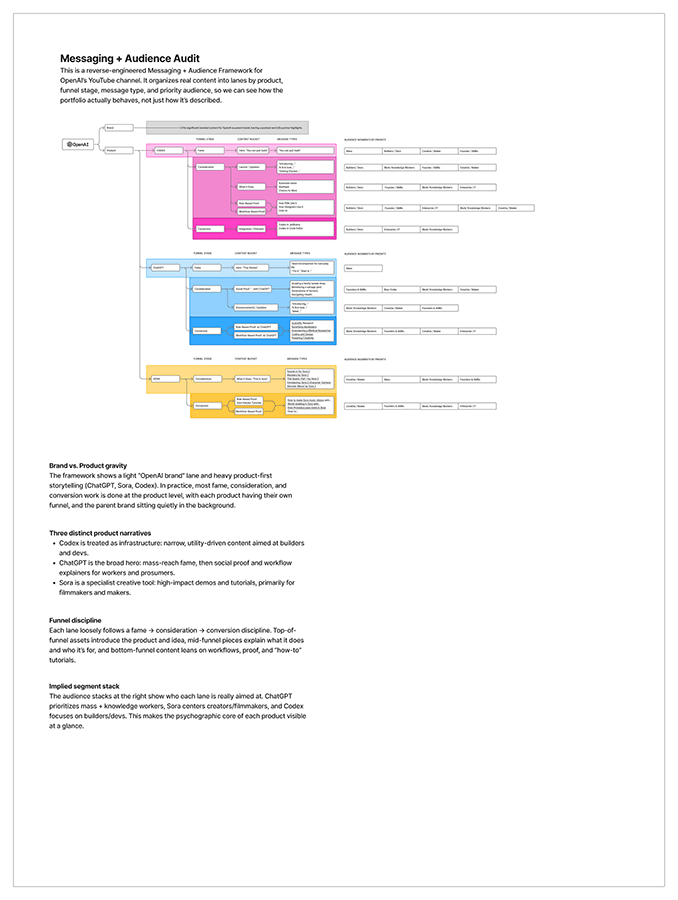
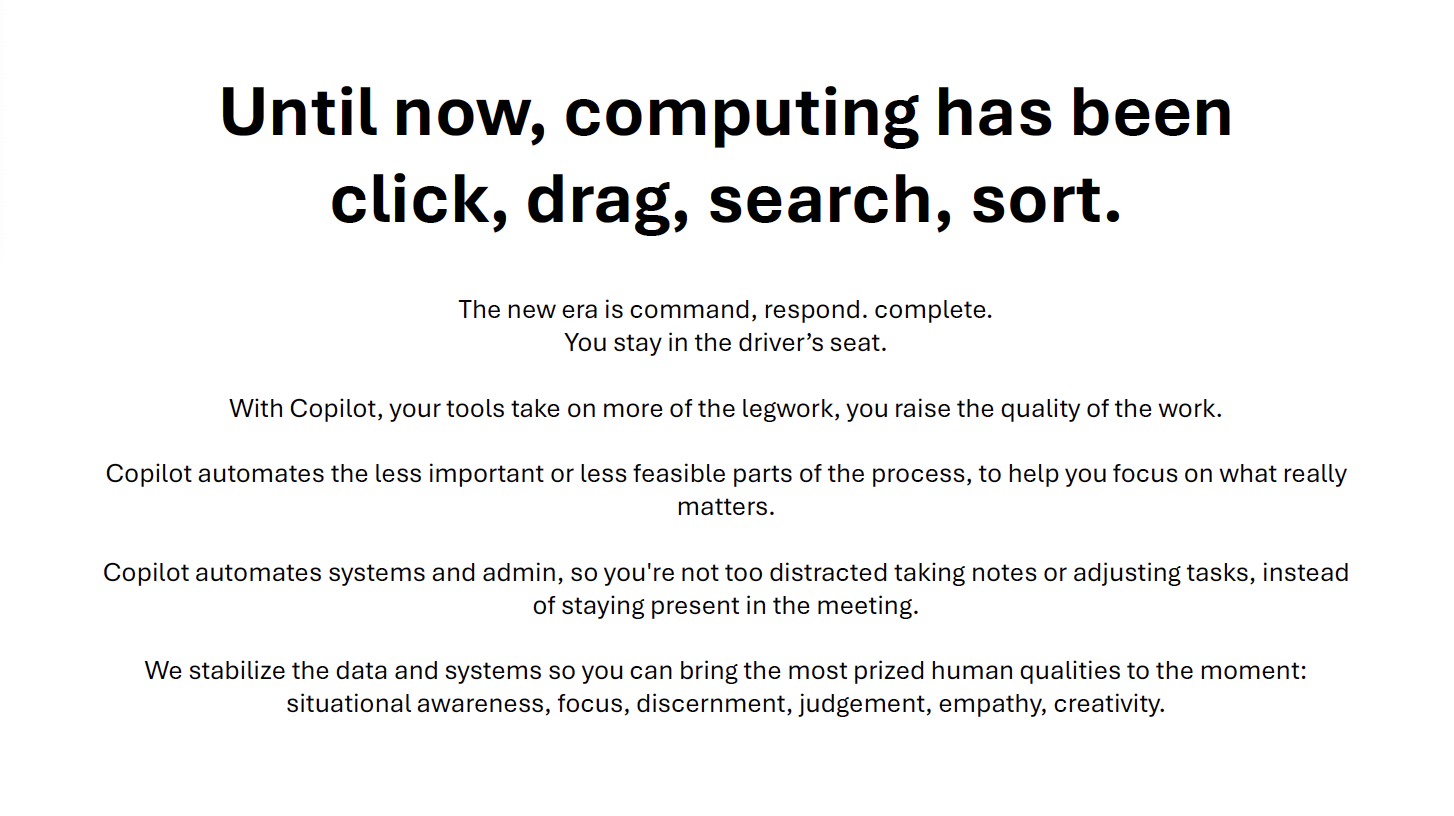
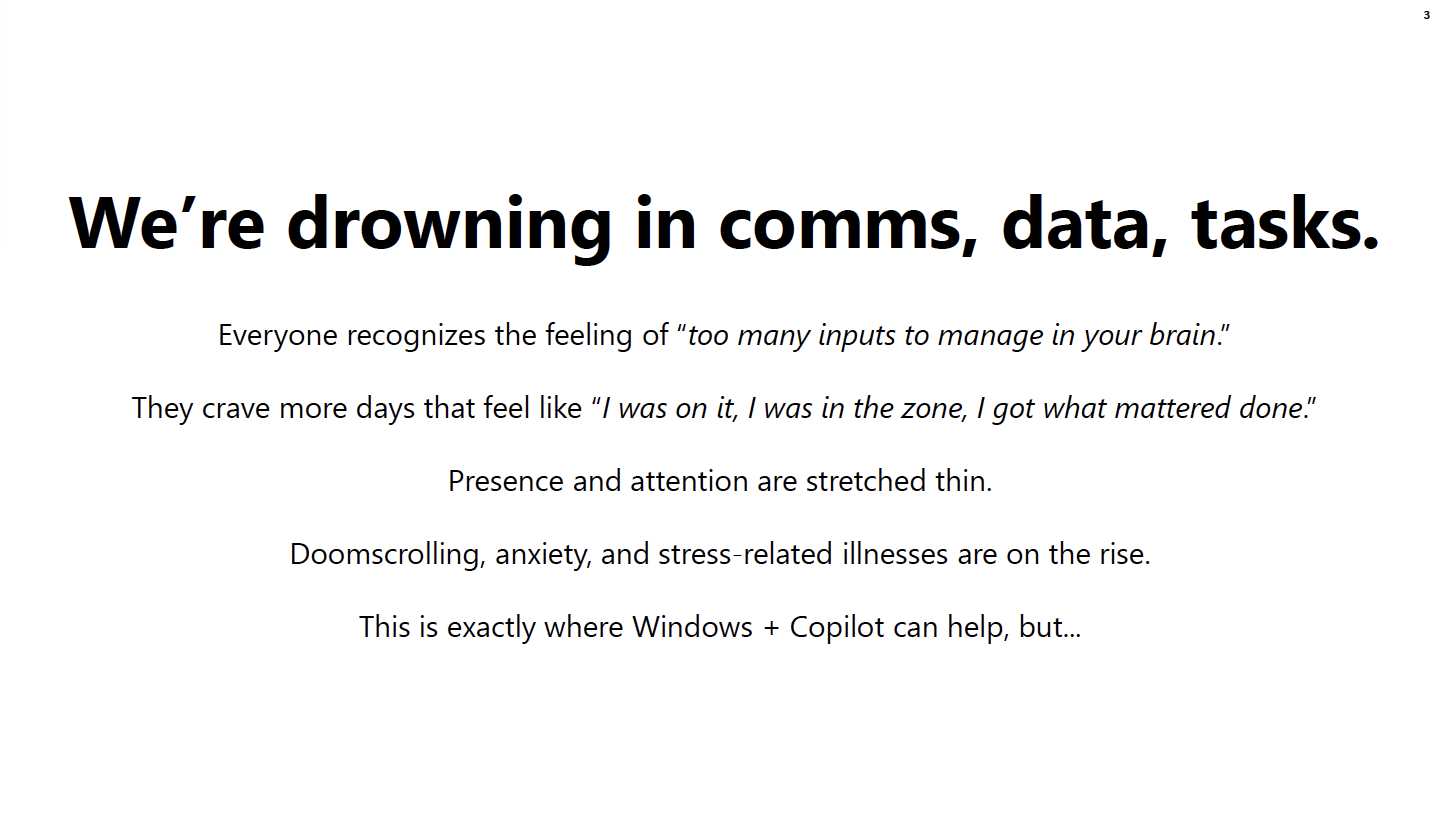
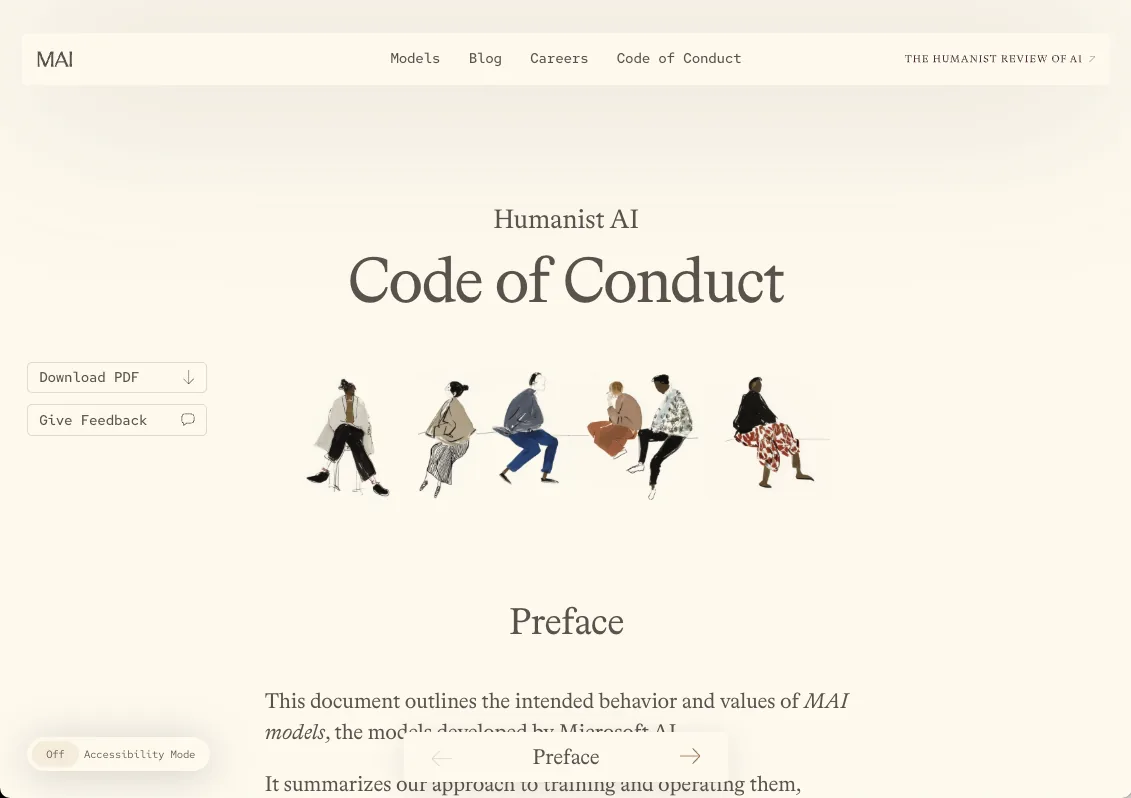 Humanist Design is the organizing principle: technology that expands human capability, not replace humans. The product isn't the hero. The person using it is. The airplane cockpit analogy (cognitive resource management) makes the mechanism concrete: autopilot doesn't fly the plane. It stabilizes the overhead (altitude, heading, trim) so the human can focus on situational awareness, discernment, and the decisions that actually matter. Less cognitive load. More presence. More flow. Human + system, not human vs. machine. The aviation industry faced this transition decades ago. Pilots were afraid, but autopilot didn't replace pilots, it elevated the role, and the industry.
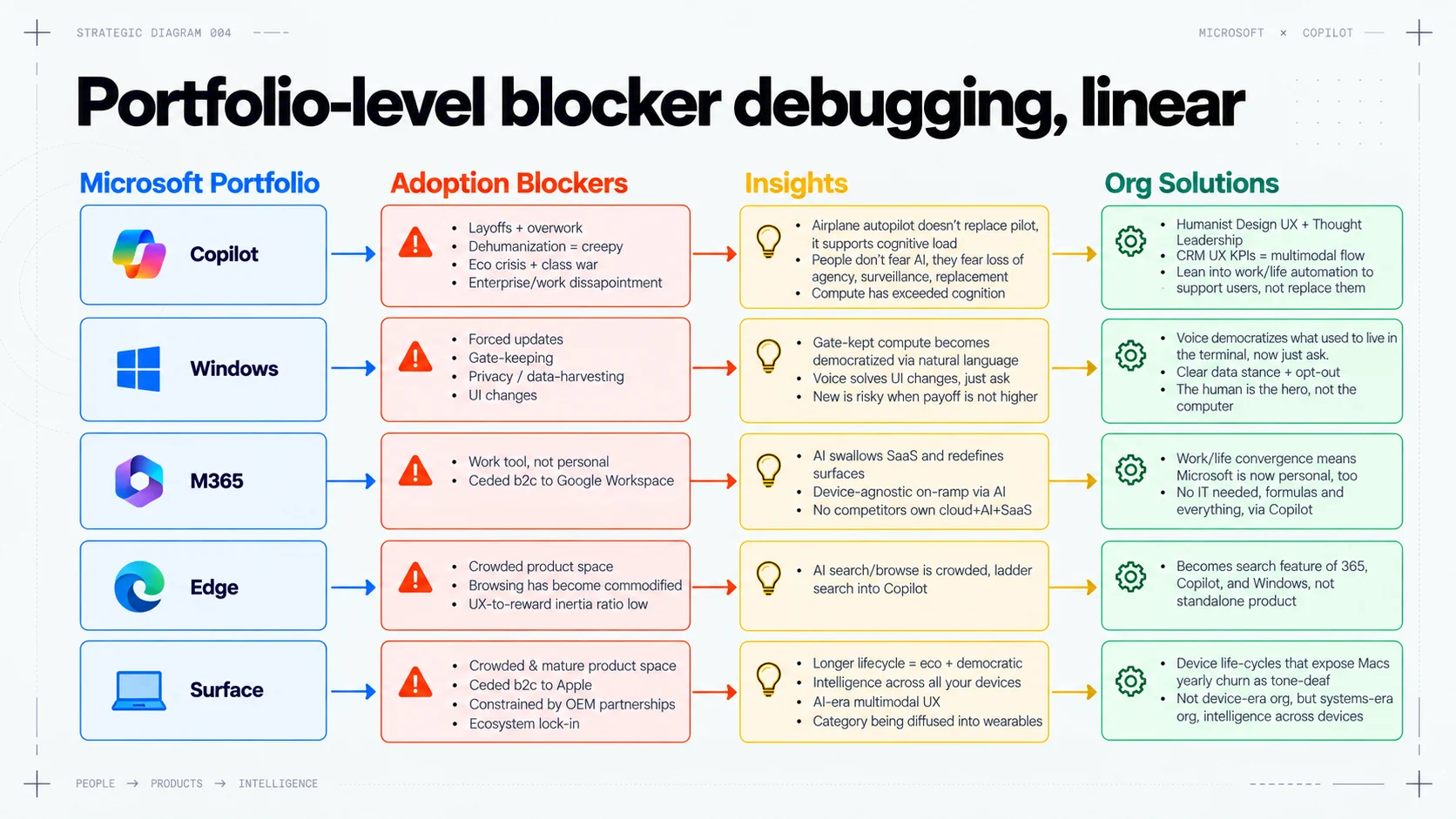 The solution: a unified narrative architecture. Copilot and 365 as the layer users interact with most directly and trust most habitually. A credible Microsoft in the age of AI story (grounded in cognitive ergonomics, human-first design, and reliability) becomes the trust infrastructure that makes Copilot feel like a safe extension, and 365 feel like a canvas for your whole life... not just a work tool.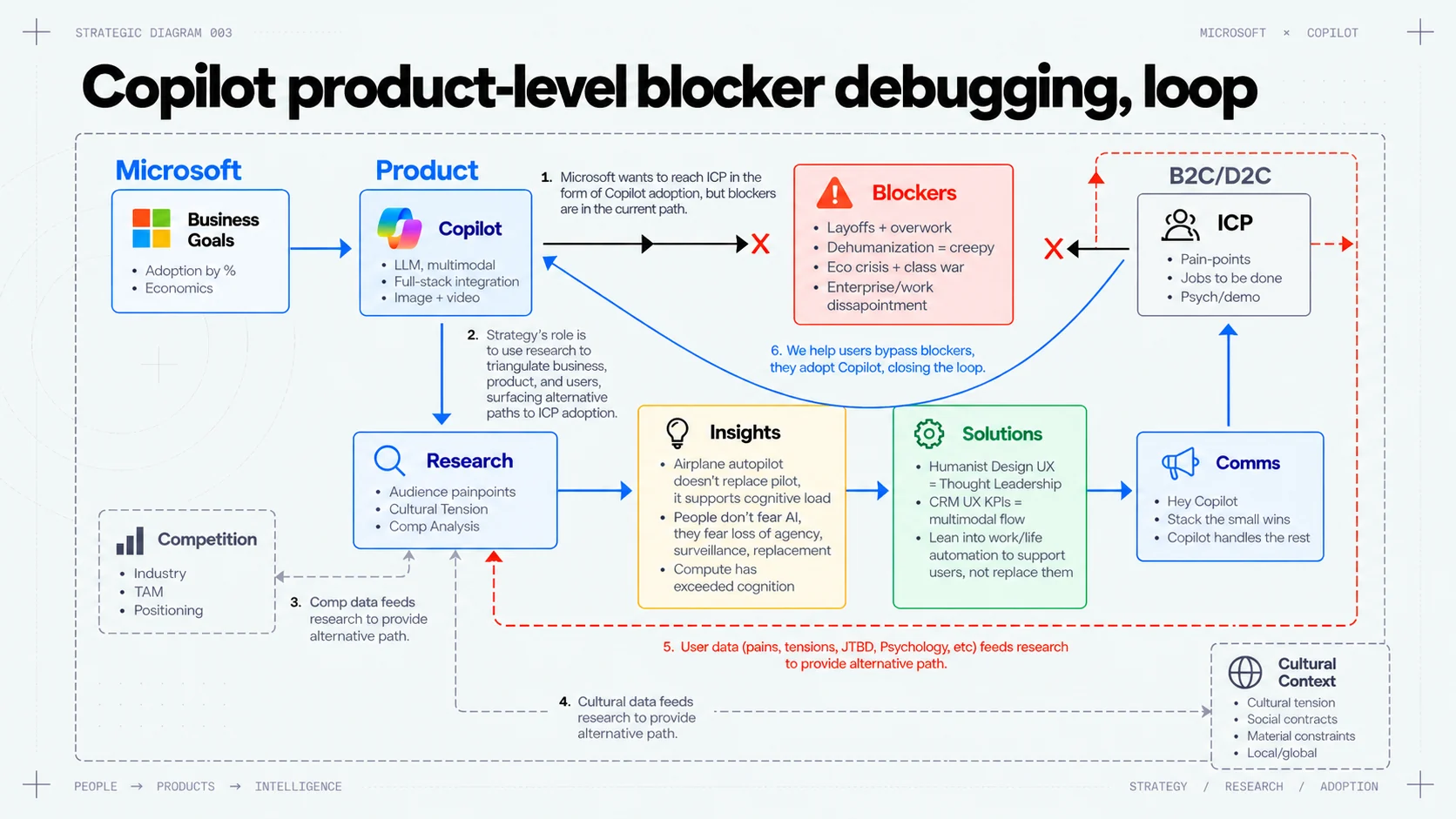
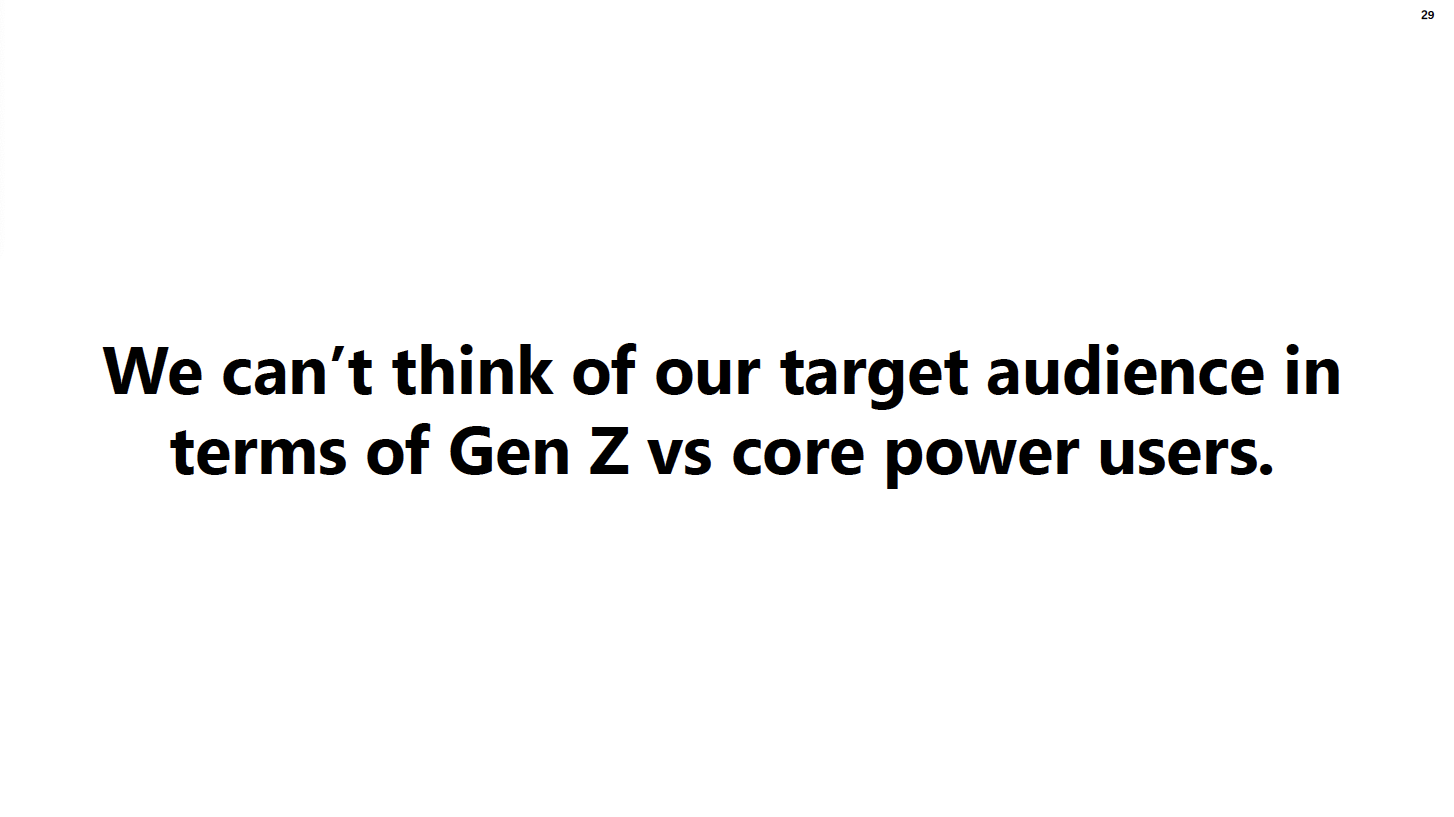
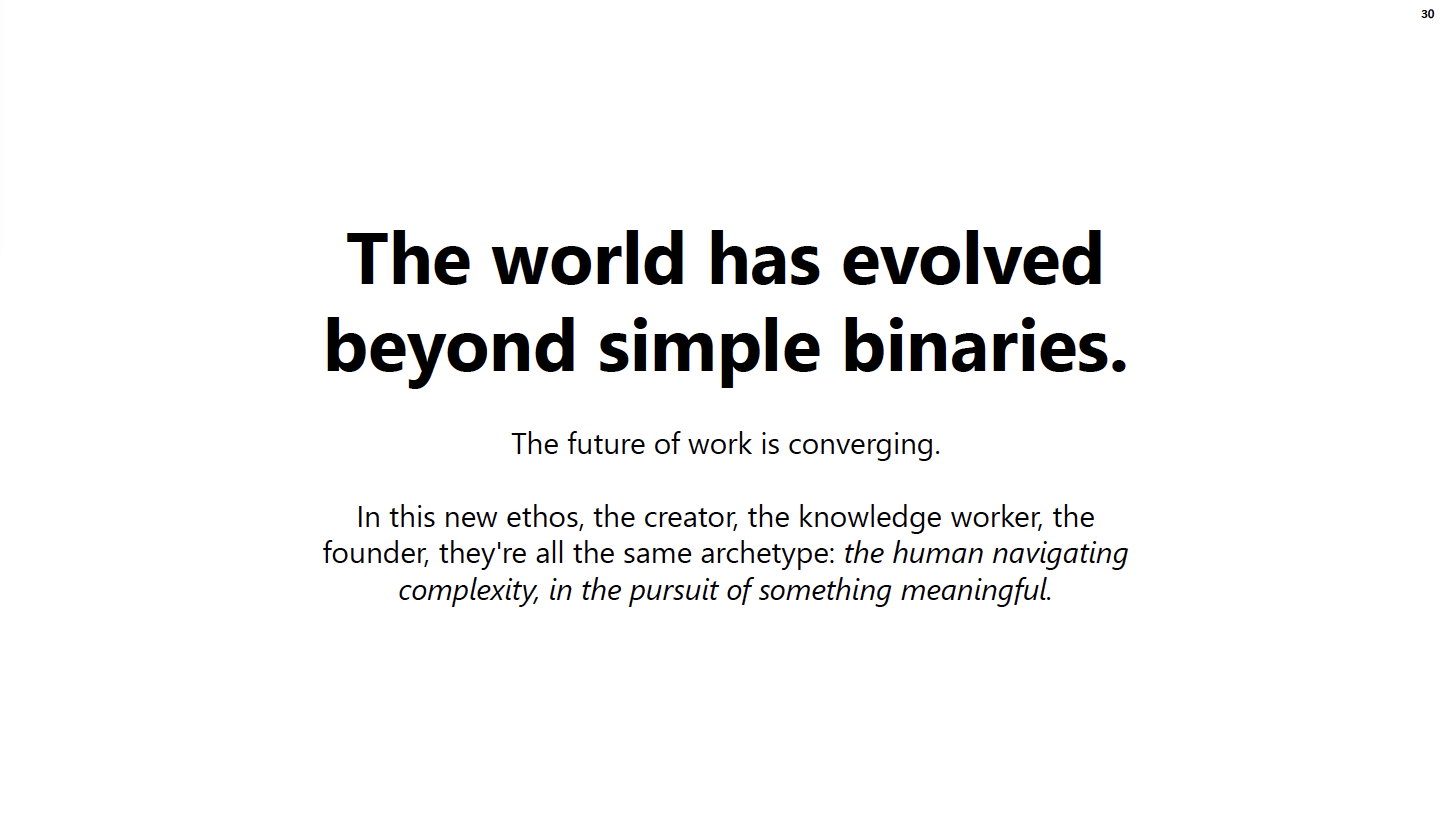
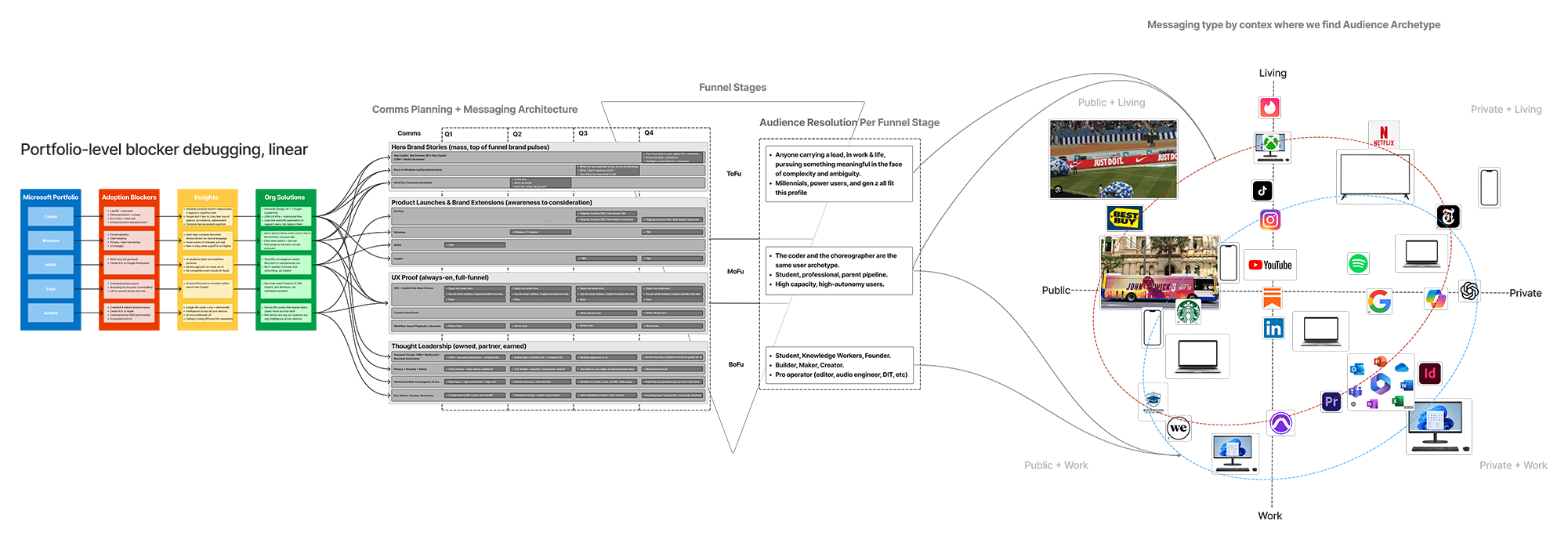
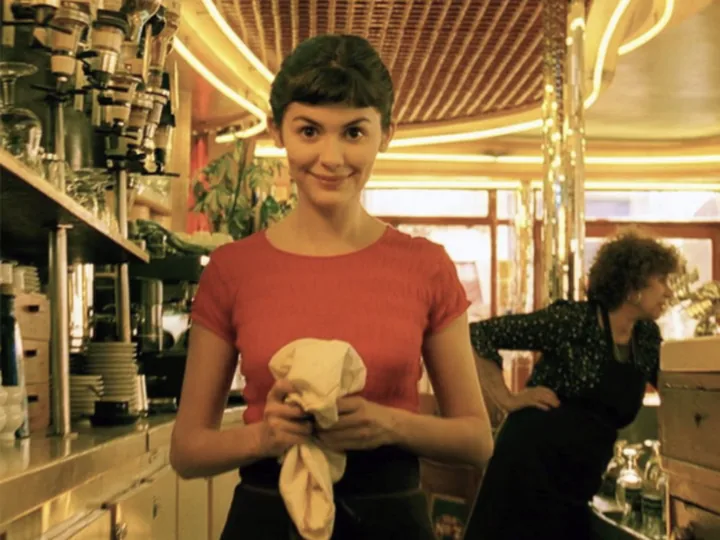
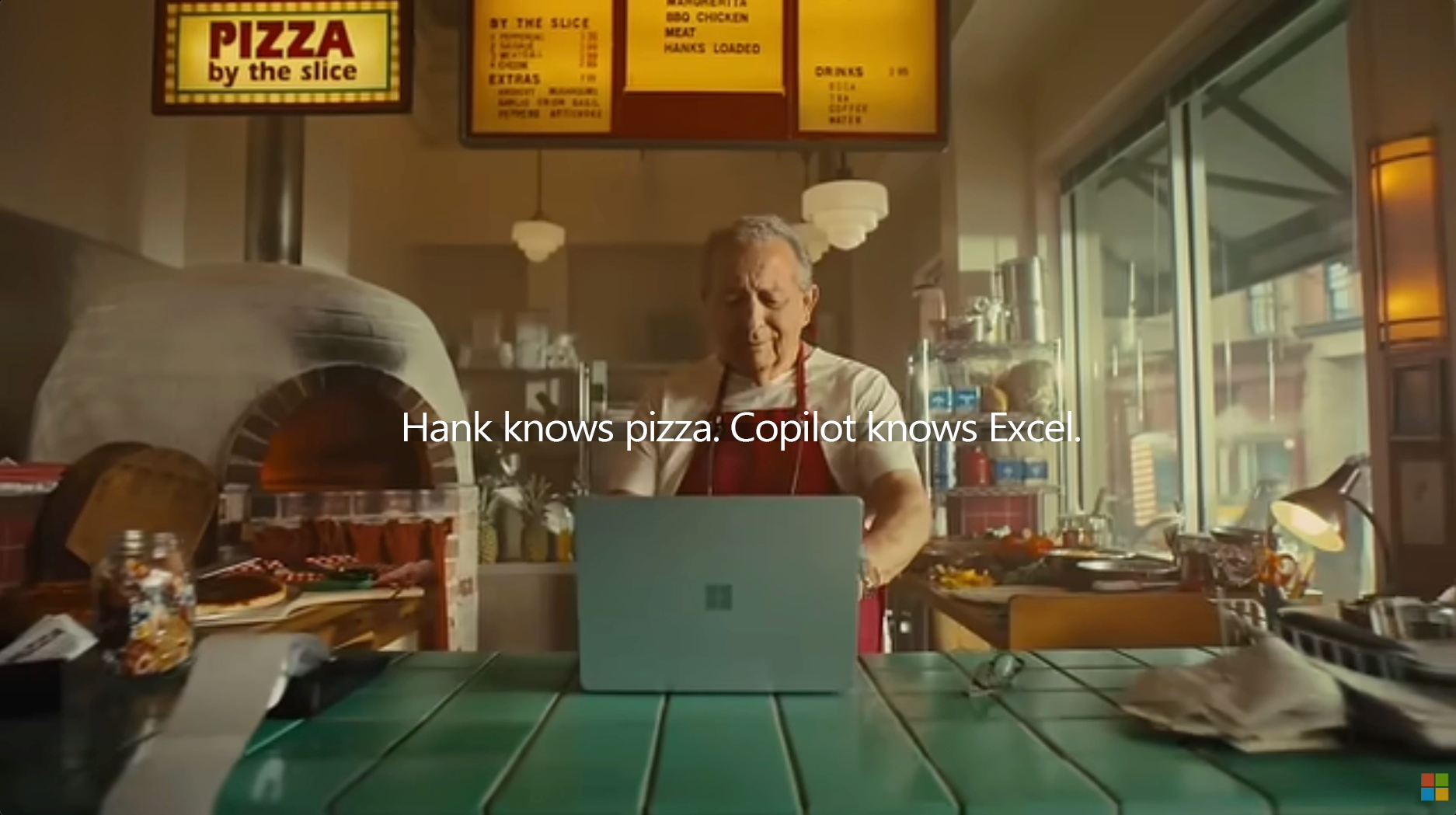
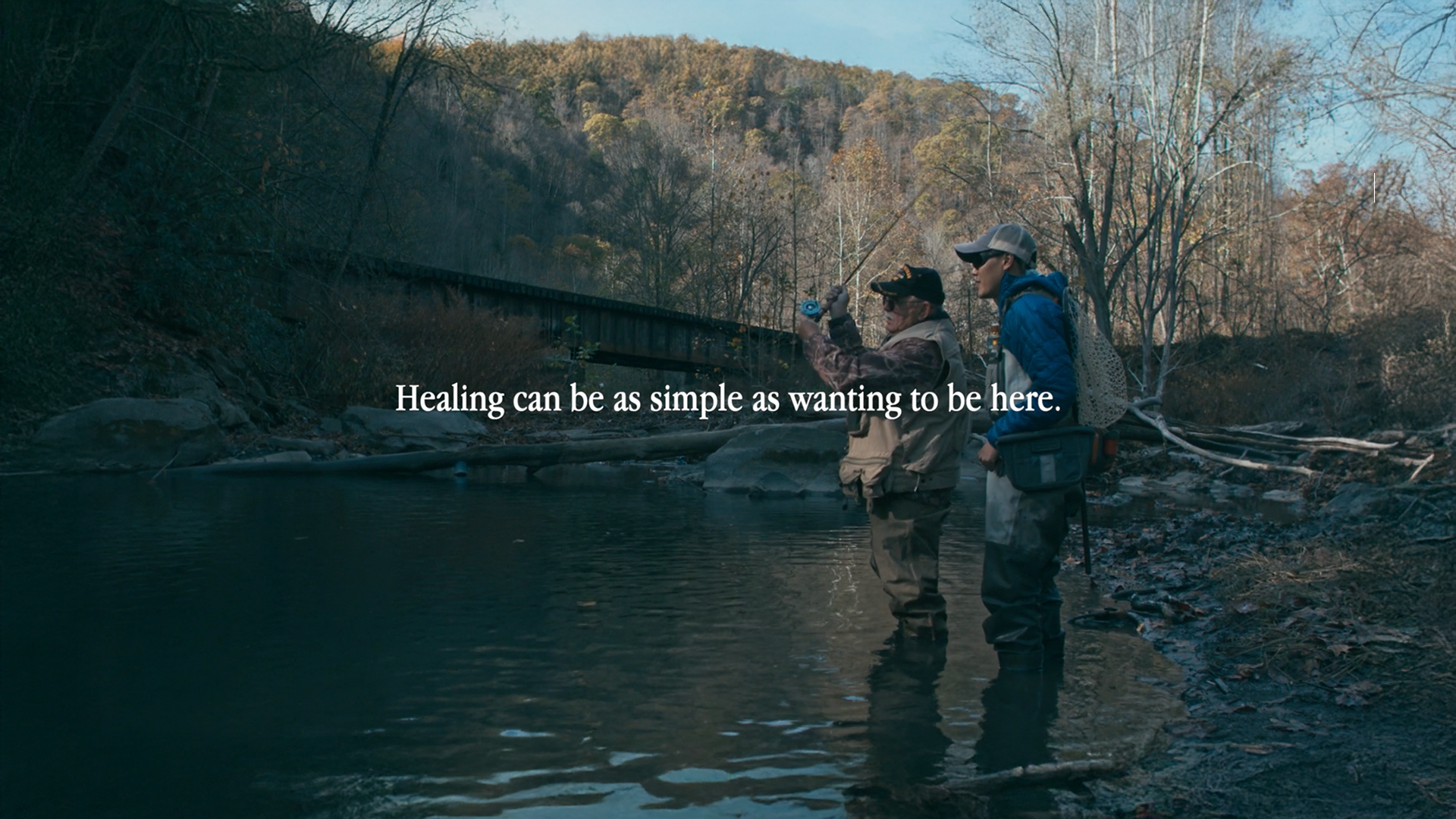
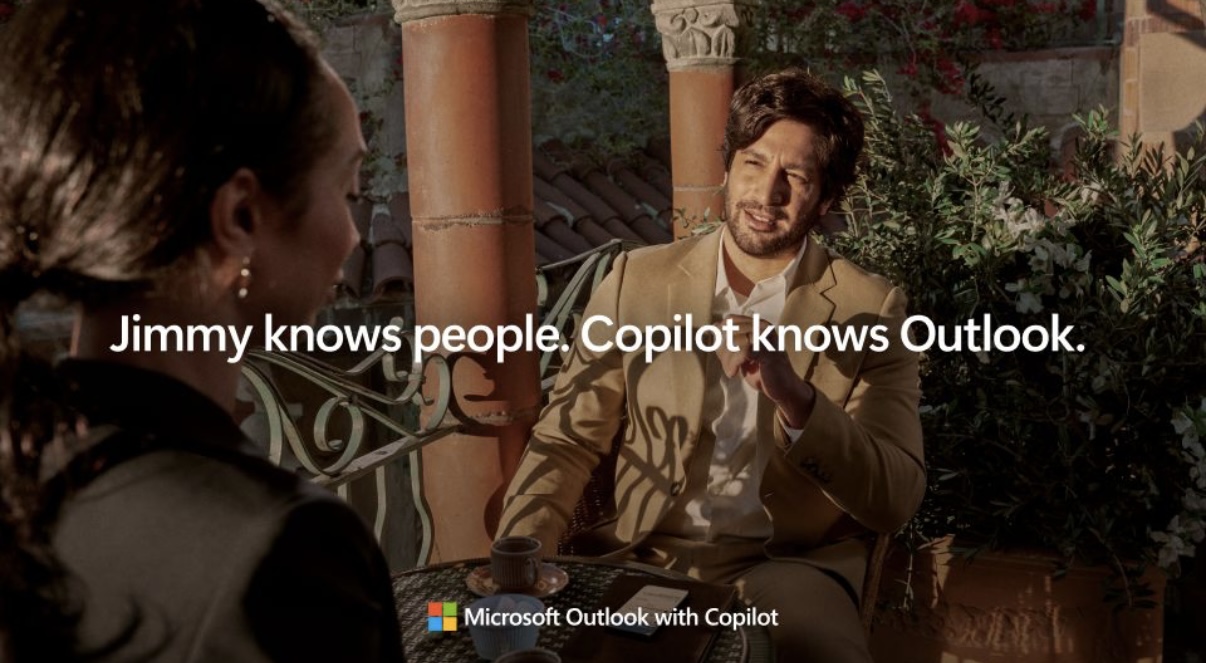
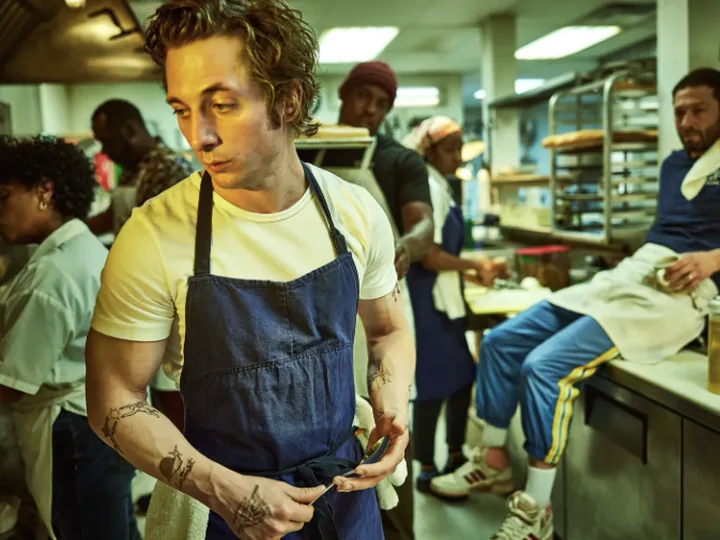 Learning from aviation's bounded automation model of supporting the pilot (so the pilot can retain situational awareness, discernment, presence, empathy, creativity), Copilot automates the busywork that dulls the priceless human qualities, so the person can focus on what matters most. Instead of powerful product (how the category often speaks), it's empowered user. Hank is the hero. Jimmy is the hero.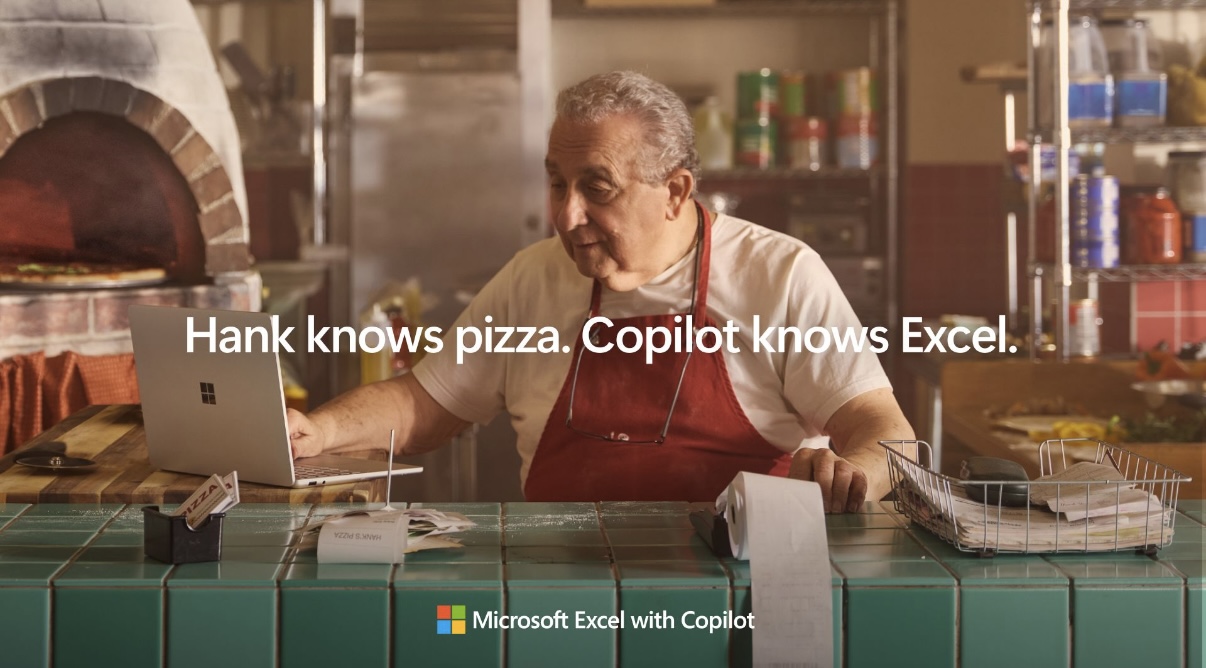
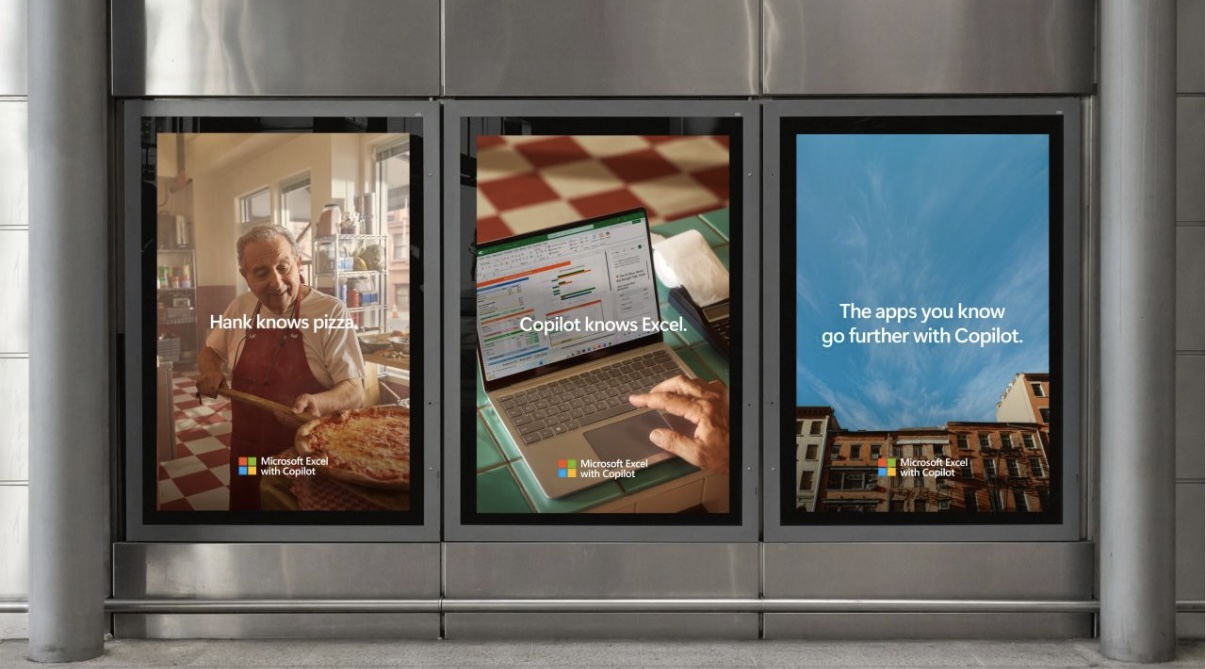
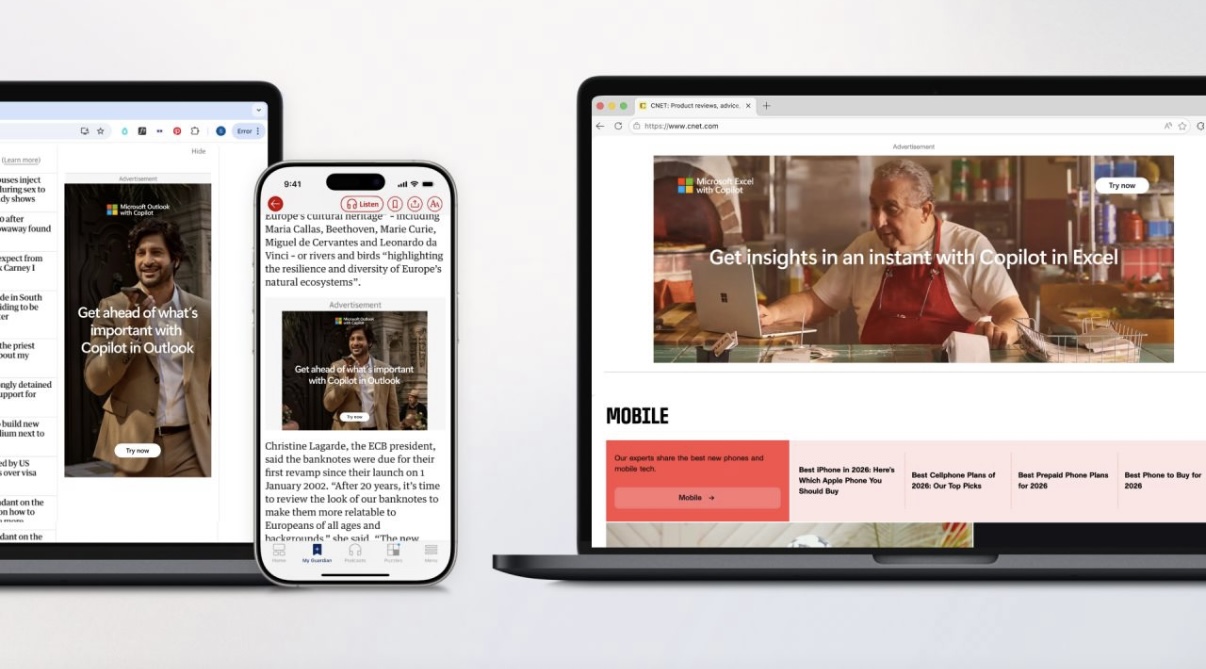
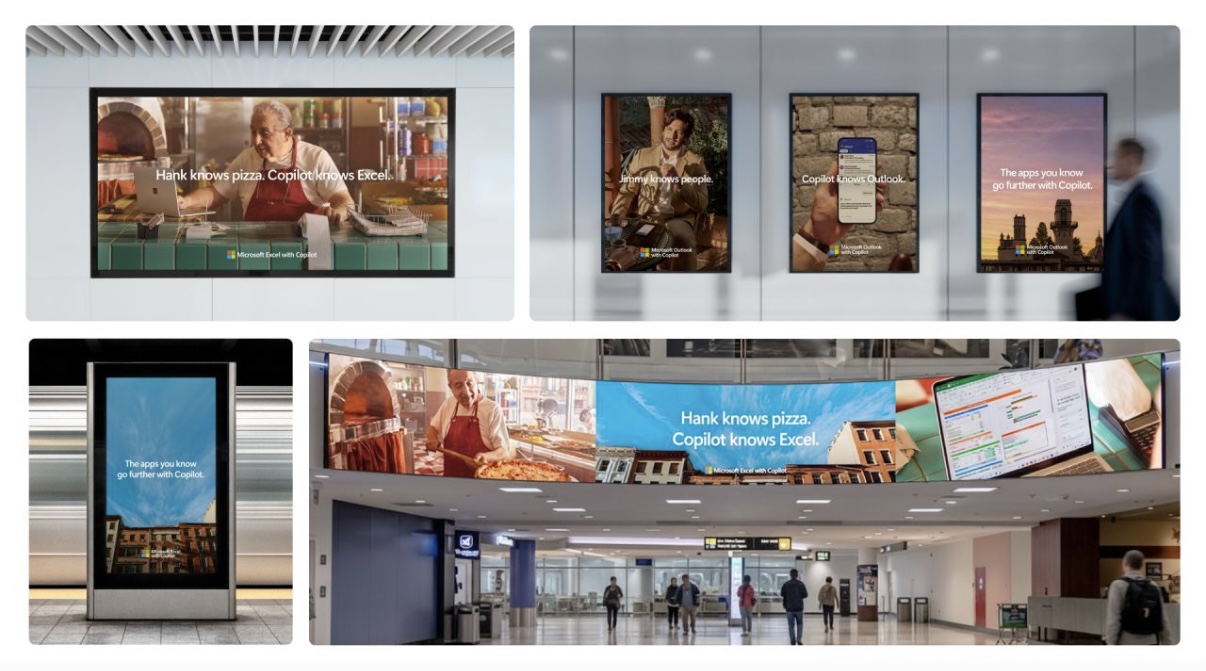


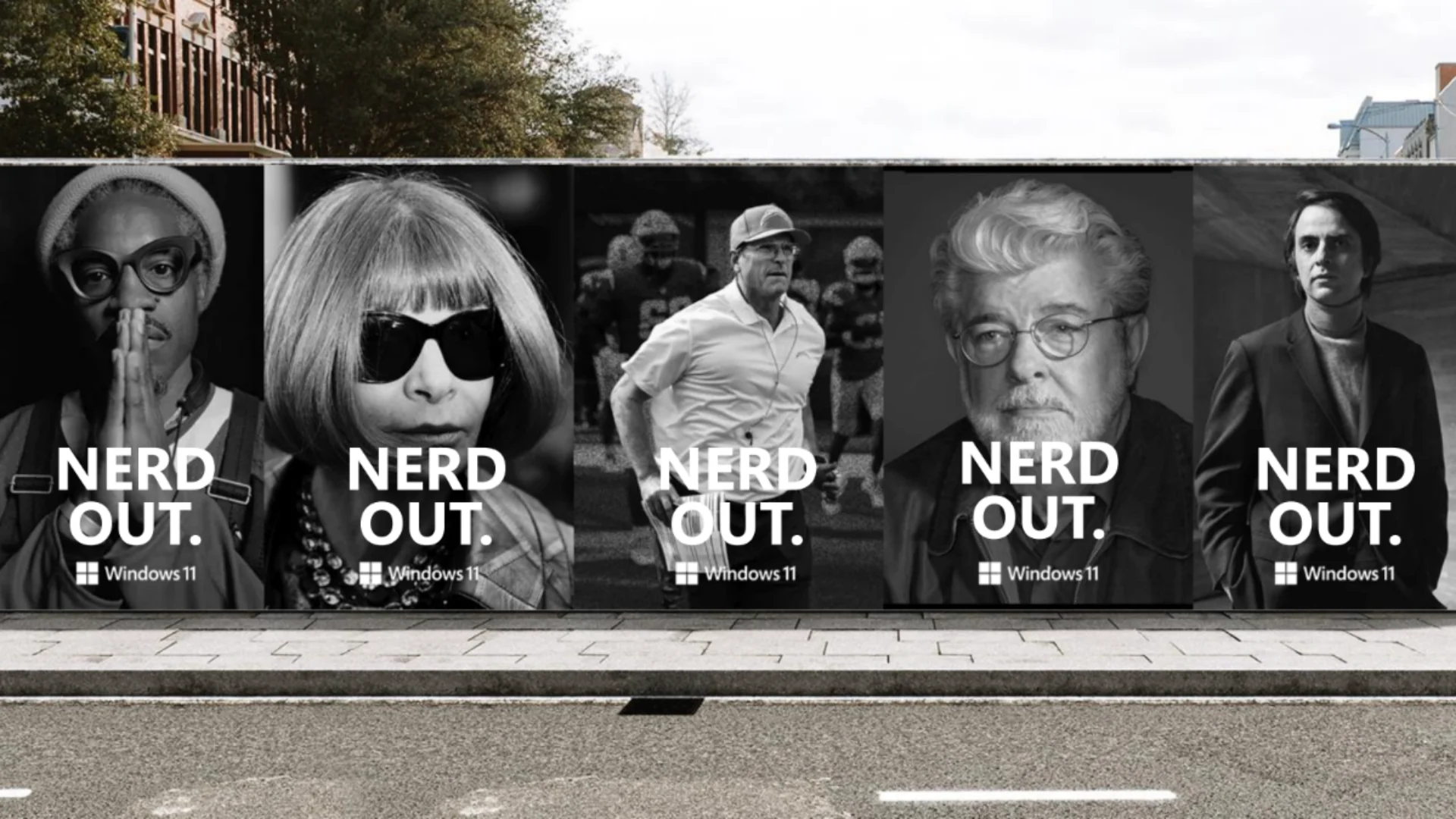
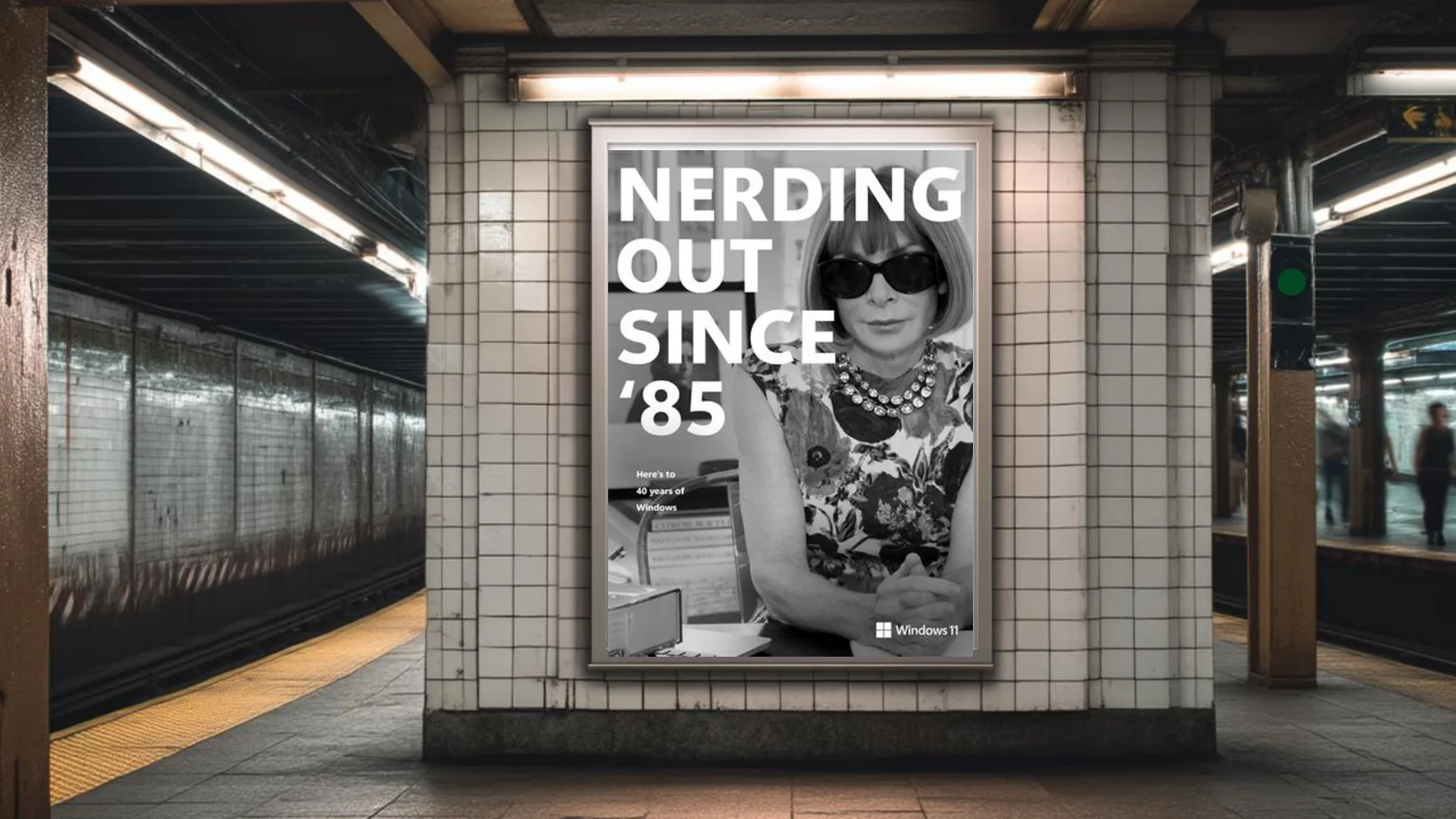


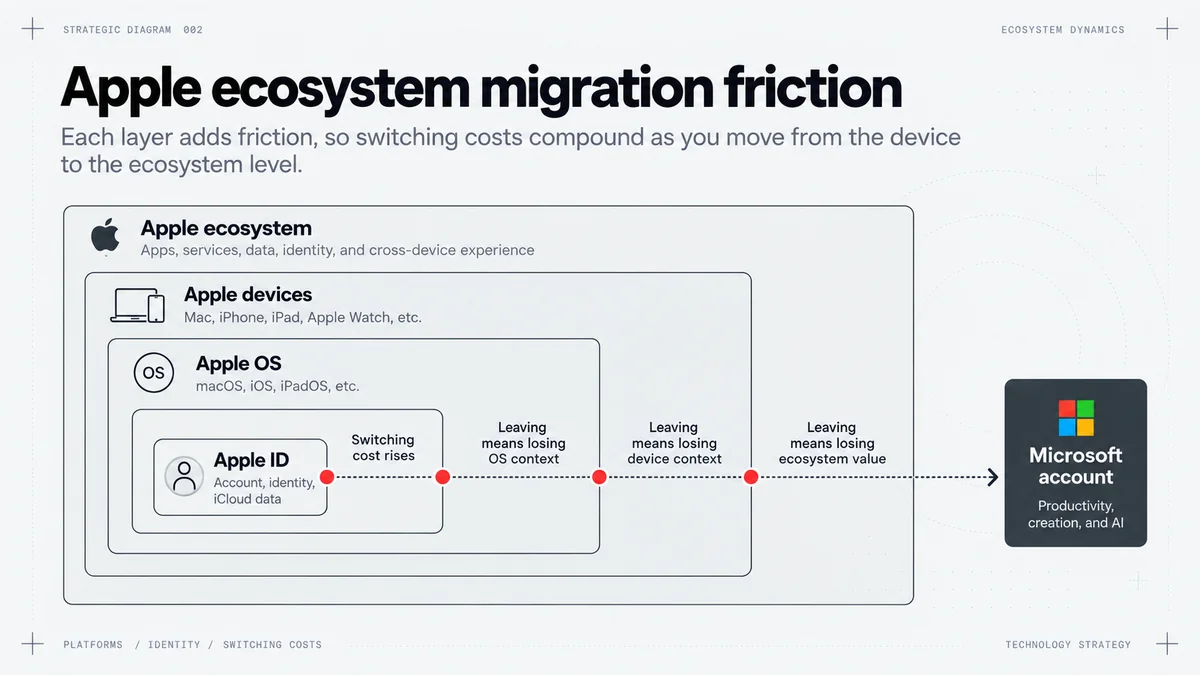
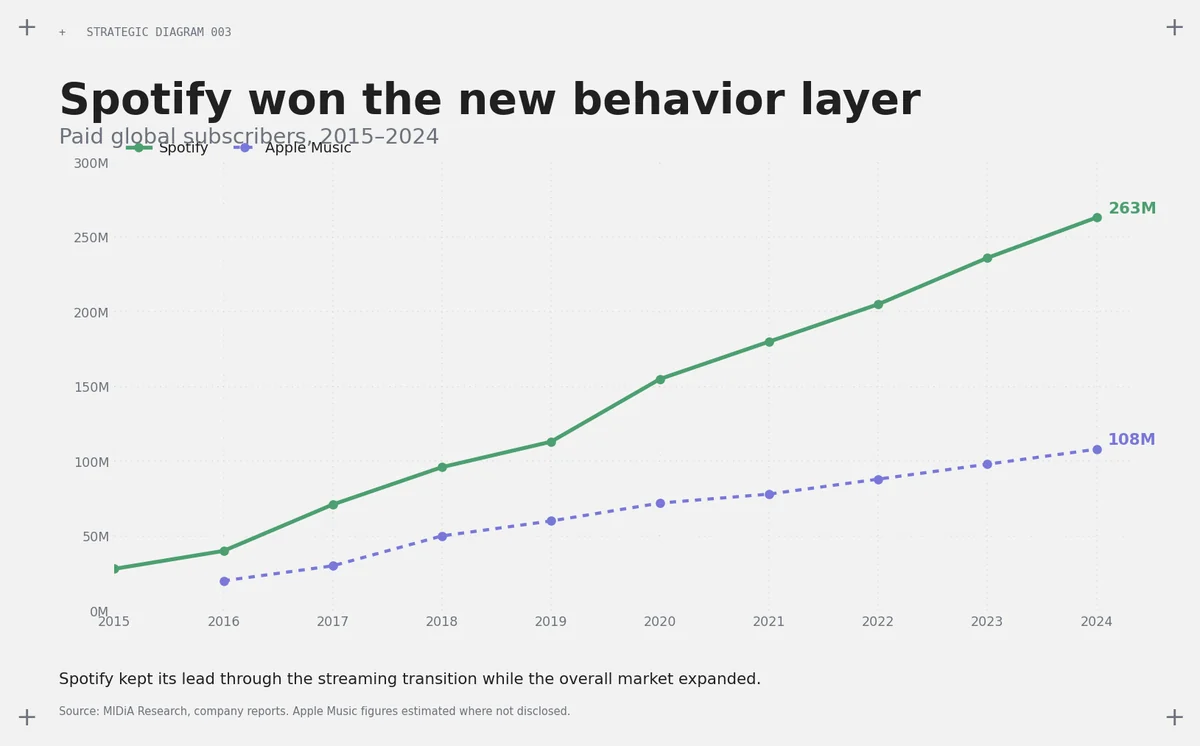
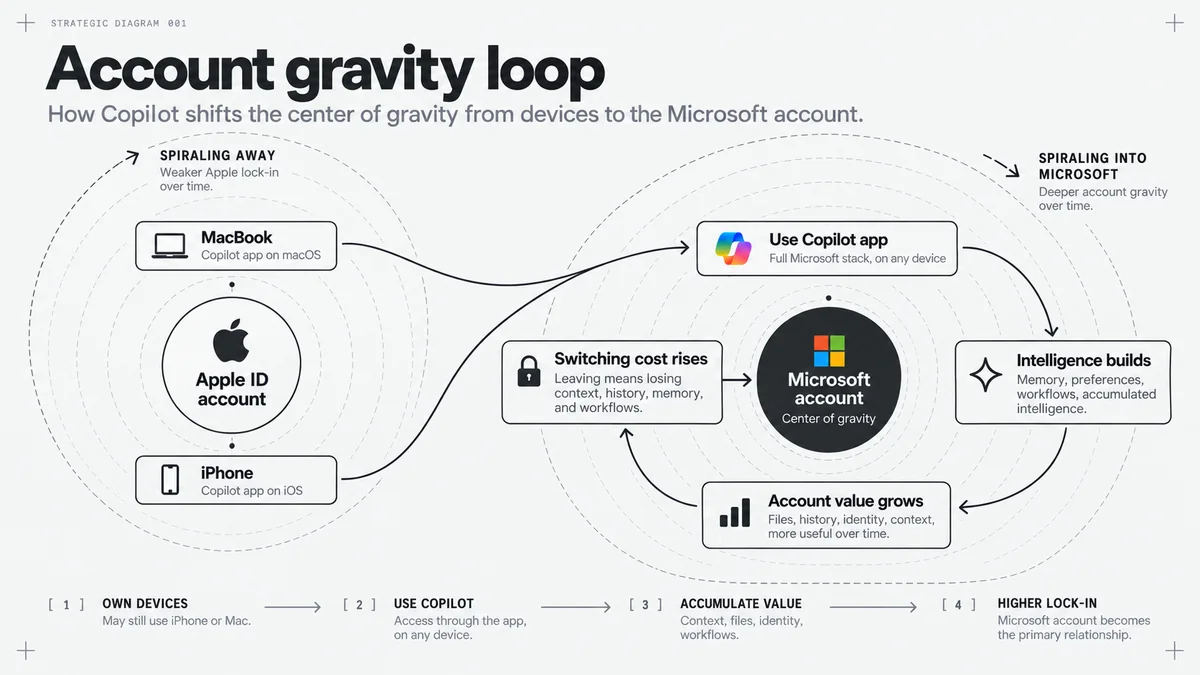
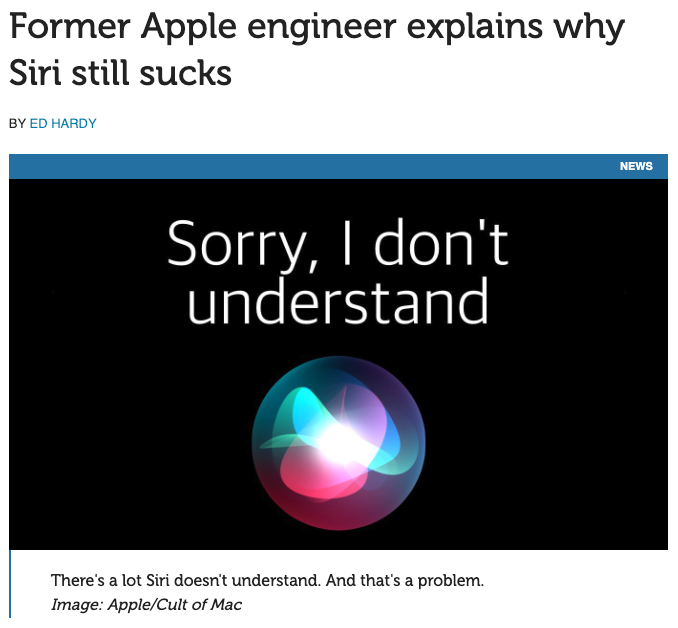 This creates an opening that does not require Microsoft to win the hardware decision first.
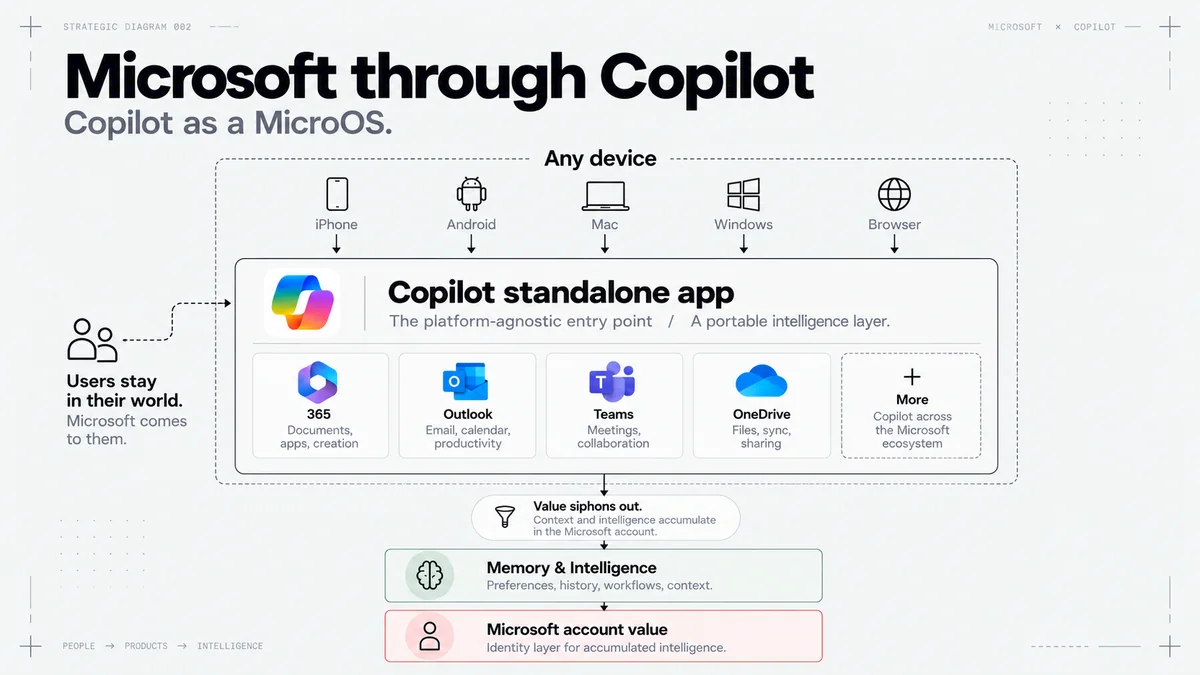



 THE IDEA: